
Average Return vs Actual Return for Retirees
Why Average Returns Mislead Retirees
The Average Return Report Card: Why Your Money Gets the Wrong Grade
![[HERO] Why Average Returns Mislead Retirees](https://cdn.marblism.com/eimyFzyYB02.webp "[HERO] Why Average Returns Mislead Retirees")
Start here: See what your retirement actually looks like → 👉 Book Your Million Dollar Hour™
If you’ve spent any time talking to a traditional financial advisor, you’ve heard the "Magic Number." It’s usually somewhere between 7% and 10%. They point to a colorful chart of the S&P 500, pat you on the back, and say, "Don’t worry, the market averages 8% over the long haul. Just stay the course."
Here’s the problem: You don’t live in the "long haul." You live in the right now.
For a "Quiet Builder": someone who has spent thirty years moving bricks to build a life of stability: relying on "average returns" is like trying to cross a river that is "on average" three feet deep. You can still drown in the ten-foot hole in the middle.
In the world of institutional-grade engineering, we call this the difference between Participation and Performance. Wall Street wants you to participate in their roller coaster because they get paid whether you’re at the top of the loop or plummeting toward the pavement. At Your Street Wealth, we believe retirement shouldn't be a ride you survive; it should be a structure you design.
Welcome to the "School of Average"
Imagine a classroom where two students take a final exam. Student A studies like a fanatic and gets a 100%. Student B spends the semester staring at the wall and gets a 0%.
The principal walks in, looks at the spreadsheet, and announces, "Congratulations! This class has a 50% average. Everyone is doing just fine!"
Student B is still failing. Student B is going to summer school. But on the "average" report card, the reality of that zero is hidden by the success of the hundred.
Wall Street is the School of Average. They use arithmetic averages to hide what your dollars actually experienced. That gap is the Sequence of Return Margin: the real-world difference between what the chart says and what your account value did.
Here’s the clean version of the math:
Year 1: -50%
Year 2: +50%
Arithmetic average: 0%
Actual ending value: not back to even
If you start with $100,000 and lose 50%, you fall to $50,000.
If you then gain 50% on $50,000, you only rise to $75,000.
So yes, the "average return" is 0%.
But the actual result in your pocket is -$25,000, or -25%.
That’s the myth in one sentence: Average is a math shortcut. Actual is what you can spend.
And this is exactly why retirees get misled. Arithmetic averages treat every year like an isolated event. Your retirement account does not. It compounds forward from whatever balance is left after losses, fees, taxes, and withdrawals. Once the base gets cut, future gains are working with fewer dollars. That’s why average does not equal actual compounding.
Here’s another simple example:
Year 1: +20%
Year 2: -10%
The average return is +5%. Sounds nice.
But $100,000 grows to $120,000, then falls 10% to $108,000.
Your actual two-year gain is 8% total, not 10%.
Again, average told one story. Compounding told the truth.
This is what we call "The Outcome Delusion." It sounds accurate in a brochure, but it breaks down inside a real retirement plan.
If this concerns you, you’re not alone. Most people have never actually seen what their money is doing — or where it leads. 👉 In the Million Dollar Hour™, we map your exact outcome:
• Today’s value • Future income • Hidden risks • What it should be doing instead Book your session here →
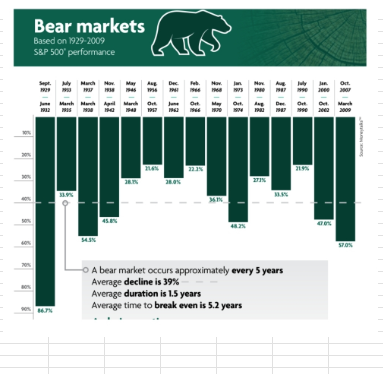
The Math of Recovery: Why Time is Your Most Expensive Asset
When you are 35, a market crash gets framed as a "buying opportunity." When you are 65, it becomes The Math of Recovery. And recovery math is not motivational. It is mechanical.
We use Volatility Recovery Analysis to show retirees the hidden cost of losses on future compounding. Most people think in percentages. Retirement lives in dollars and time. Once losses hit, both get damaged.
A 10% loss requires an 11.1% gain to recover.
A 20% loss requires a 25% gain to recover.
A 30% loss requires a 42.8% gain to recover.
A 50% loss requires a 100% gain just to get back to zero.
That’s the part Wall Street tends to skip. They sell Participation. You live with recovery.
This is the core difference between Participation vs. Engineered Performance. Participation says, "Stay invested and the averages should work out." Engineered Performance asks a better question: How many years of compounding can you afford to lose?
For a retiree or pre-retiree, lost time is often more expensive than the loss itself. Why? Because compounding only works on the dollars that remain. A bad sequence early in retirement can reduce the principal, slow future growth, and force more withdrawals from a smaller base. That is how one market hit can echo for years.
And if you are already taking income, the math gets harsher. If you withdraw 5% during a year when the market is down 20%, you did not just "ride out volatility." You removed money from a weakened account. You sold principal at a discount. That damage is not theoretical. It directly reduces Compounding Efficiency, which is your ability to keep gains building on a strong base over time.
The 0% Floor: Engineered Certainty vs. Market Participation
Most retirees are stuck in a "False Model" driven by greed and fear. When the Greed/Fear meter is high, they take on too much risk. When it’s low, they panic and sell.
Wall Street treats retirement like a "Single Pillar" model. They give you a bucket of stocks and tell you to hope for the best. It’s a Rolodex strategy in a SpaceX world. It was durable in the 1980s, but today’s market is faster, more volatile, and filled with hidden "leaks" like fees and taxes.
At Your Street Wealth, we move our clients toward Fully Performing Assets (FPA). Think of FPA as the "smartphone" of finance.
Remember when you had a separate camera, a pager, a map, and a clunky house phone? The smartphone consolidated all those "single-use" tools into one high-performance machine. An FPA does the same for your wealth. It consolidates 5 to 15 "pillars" of value: growth, protection, tax-free income, and long-term care: into one vehicle.
The most critical part of this engineering? The 0% Floor.
Imagine a game where the rules are:
Wall Street: You can make 30%, or you can lose 30%.
Your Street: You can make 30%, but you can never lose more than 0%.
When the market crashes (and it will), your account stays flat. You don't have to spend the next five years of your life doing "Recovery Math" just to get back to where you were. You keep your gains, you protect your principal, and you maintain your Compounding Efficiency.

The Margin Audit™: Finding the Leaks
You can estimate your income needs, but you cannot predict future portfolio value when losses and leaks like fees and taxes are uncontrollable. That uncertainty is why so many successful people feel financially fatigued. They have money, but not clarity. Statements, but not architecture.
This is where The Margin Audit™ becomes the truth-teller.
We review your current assets and sort them into four practical categories:
Assets at Risk (AAR): Your "Teens." Market-based assets that can swing hard and create Sequence of Return problems at the worst possible time.
Non-Performing Assets (NPA): The "Infants." Idle cash and low-yield money that quietly loses purchasing power.
Underperforming Assets (UPA): Assets with high fees, low utility, weak efficiency, or unnecessary drag.
Fully Performing Assets (FPA): The "Foundation." Multi-pillar assets engineered to combine growth, protection, income efficiency, and other value inside one structure.
This matters because most traditional retirement tools are single-pillar tools. Banks focus on liquidity. Stocks focus on growth. Real estate may focus on appreciation or income, but often with fees, complexity, taxes, and risk attached. Each one does one main job. That old model is like carrying a pager, a flip phone, a camera, a paper map, and a TV remote in separate pockets.
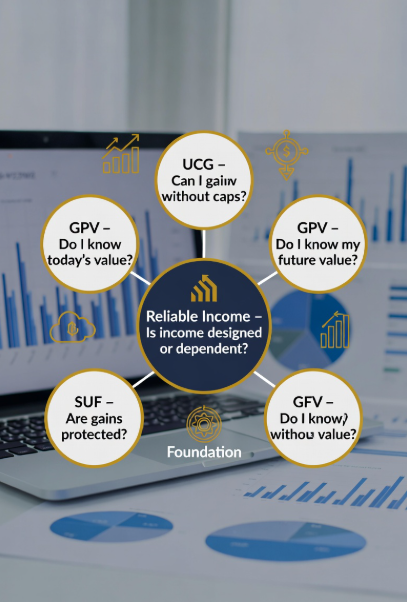
FPA is the smartphone of finance. It consolidates 5 to 15 pillars of value into one vehicle, which may include growth, principal protection, tax-free income, long-term care benefits, and other engineered advantages. In many cases, these structures use a 0% floor, low internal costs, A+ guarantees, and forms of Uncapped Gains (UCG) with Expanded Market Participation (EMP) that can increase credited growth beyond what most brokers assume. In plain English: this is not the old "3% cap" story many retirees have been told.
The Margin Audit™ shows where your plan is bleeding efficiency, where average-return assumptions are hiding risk, and where better design may recover lost time.
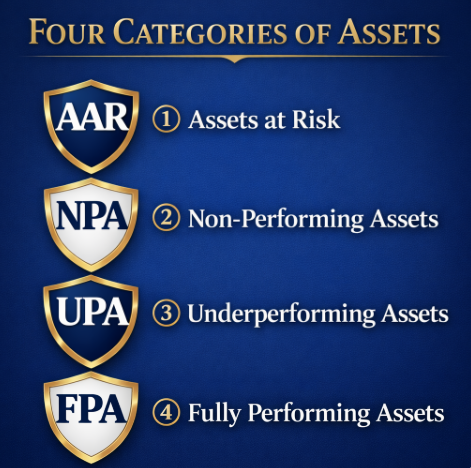
By moving assets from the "At Risk" category into "Fully Performing" categories, we aren't just chasing a higher "average." We are engineering a guaranteed outcome. We are shifting from Participation (gambling on headlines) to Performance (designing for micro-margins).
Unlearning the "Average" Myth
The Quiet Builder does not need more Wall Street theater. You do not need another chart, another slogan, or another promise that "it all averages out." You need truthful math.
You need to know your real compounding rate: not the average printed in a brochure, but the actual rate your money has earned after losses, leaks, and recovery time. That is the number that matters in retirement because that is the number that determines what lands in your pocket.
That is exactly what the Million Dollar Hour™ Forecast is built to reveal.
In this 60-minute session, we stop talking about averages and start measuring actuals. We calculate the compounded growth you’ve really earned versus what you may have been told. We identify years lost to market downturns, fees, taxes, and slow recovery. We show the difference between Participation vs. Engineered Performance. And we map a clearer path toward a safer, more reliable retirement structure.
This is not a free coffee meeting. It is a paid professional review for serious people who want mathematical clarity. For $995, we deliver a Margin Audit™ and Million Dollar Hour™ Forecast built for Architects, not impulse shoppers. It is designed for high-intent readers who are ready to unlearn bad assumptions and replace them with financial architecture that can last for life.
If Wall Street has been grading your future on an average, the Million Dollar Hour™ Forecast is where you finally see the score that actually counts.
Peace is the Path, Wisdom is the Way
If your current plan relies on average returns, you may be standing on a very polished version of uncertainty. The numbers can look fine on paper while your real compounding rate quietly lags behind. That is how retirees end up with more confusion than confidence.
Peace is the path, wisdom is the way.
The wise move is not to chase bigger headlines. It is to understand your true math, protect your time, and make decisions using design instead of hope. Wall Street runs on a False Model driven by fear and greed. Your retirement does not have to.
It is time to stop guessing and start measuring. Time to move from Participation to Engineered Performance. Time to know whether your current strategy is actually compounding, or just averaging.
Your Money, Your Rules, In Your Time, On Your Street.
Ready for clarity instead of confusion?
The Million Dollar Hour™ is your educational, one-on-one retirement review that reveals where your plan leads — not just where it’s been.
👉 Schedule your session today.
You can keep participating… Or you can finally see the outcome. The Million Dollar Hour™ shows you exactly:
✔ Where you are ✔ Where you’re going ✔ How to fix the gaps 👉 Book your session now
Check out the Retirement Blueprint