
Is Your Paycheck About to Shrink? 7 Mistakes High Earners Make
Is Your Paycheck About to Shrink? 7 Mistakes High Earners Make with the 2026 Roth Catch-Up Rule
![[HERO] Is Your Paycheck About to Shrink? 7 Mistakes High Earners Make with the 2026 Roth Catch-Up Rule](https://cdn.marblism.com/BoPhdI1O4iv.webp "[HERO] Is Your Paycheck About to Shrink? 7 Mistakes High Earners Make with the 2026 Roth Catch-Up Rule")
The IRS just changed the locks on your 401(k) deduction, and if you aren’t paying attention, your January 2026 paycheck is going to feel a lot lighter.
For years, the "Catch-Up Contribution" was the high-earner’s best friend. Once you hit age 50, you could shove an extra few thousand dollars into your retirement account, lower your taxable income, and tell yourself you were "winning." It was a classic pre-tax move: a reliable part of the old-school financial Rolodex.
But we live in a SpaceX world now, and the IRS just upgraded the software.
Under the SECURE Act 2.0, a new rule kicks in on January 1, 2026. If you earned $145,000 or more in FICA wages in 2025, the IRS is effectively banning you from taking a tax deduction on your catch-up contributions. Instead, those contributions must be designated as Roth (after-tax).
This isn't just a "paperwork change." This is a direct hit to your monthly cash flow. Because those dollars are now taxed before they hit your account, your take-home pay is about to shrink.
At Your Street Wealth, we don’t just look at "market participation": we look at financial engineering. Here are the 7 biggest mistakes high earners are making as they head toward this 2026 collision.
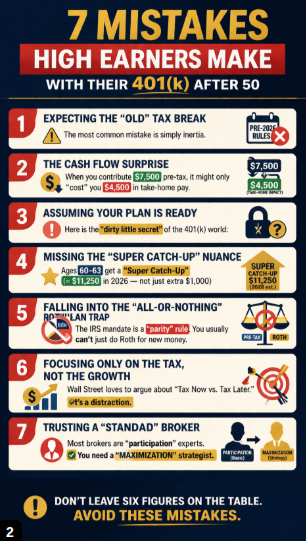
1. Expecting the "Old" Tax Break
The most common mistake is simply inertia. Many "Quiet Builders" have their 401(k) contributions on autopilot. They assume that because they’ve always received a tax deduction for their $7,500 (or more) catch-up, they will continue to do so.
In 2026, that deduction vanishes for high earners. If you don't adjust your expectations, you'll be hit with an unexpected tax bill at the end of the year, or worse, find yourself in a higher tax bracket than you planned for because your taxable income didn't drop as much as you expected. This is a classic "tax leak" that we look for during a Margin Audit™.
2. The Cash Flow Surprise
When you contribute $7,500 to a traditional pre-tax 401(k), it might only "cost" you $4,500 in actual take-home pay (depending on your bracket). When that same $7,500 must be Roth, the full $7,500 comes out of your net pay.
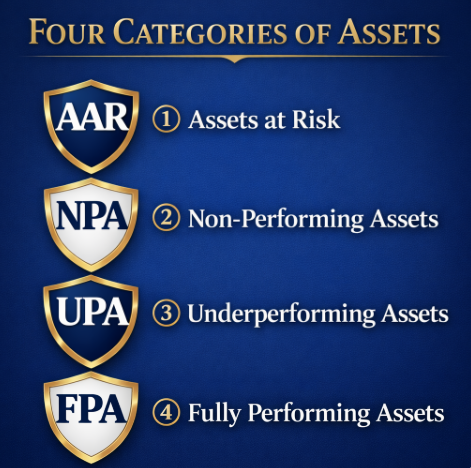
For a high-earning household, this can mean hundreds of dollars less in your pocket every single month. If you haven't engineered your cash flow to handle this shift, you might find yourself dipping into "Non-Performing Assets" (like your emergency fund) just to maintain your lifestyle.
3. Assuming Your Plan is Ready
Here is the "dirty little secret" of the 401(k) world: not every employer plan offers a Roth option. While most large companies do, many mid-sized and smaller firms are still running on 1990s infrastructure.
If your employer hasn’t added a Roth feature to their plan by January 2026, the law says they cannot allow catch-up contributions for anyone. Not for the high earners, and not for the employees making $50k. It’s an all-or-nothing game. If your plan isn't ready, your ability to "catch up" simply stops.

4. Missing the "Super Catch-Up" Nuance
The SECURE Act 2.0 did offer one small olive branch. For those aged 60, 61, 62, and 63, the catch-up limit increases significantly (estimated to be around $11,250 in 2026).
However, the same trap applies: if you're a high earner, every penny of that "Super Catch-Up" must be Roth. Many advisors will tell you to "just max it out" without calculating the Math of Recovery. They don't account for the fact that paying those taxes today might actually hinder your ability to recover from a market crash tomorrow if your liquidity is tied up in a rigid institutional lock-box.
5. Falling into the "All-or-Nothing" Plan Trap
As mentioned, the IRS mandate is a "parity" rule. If a plan wants to allow catch-up contributions for the executives making over $145k, they must offer the Roth option to everyone.
Some employers, faced with the administrative headache of updating their systems, might choose to simply eliminate catch-up contributions entirely to stay compliant without the extra work. This is why a professional retirement plan review is essential. You need to know if your company's HR department is about to accidentally sabotage your retirement timeline.
6. Focusing Only on the Tax, Not the Growth
Wall Street loves to argue about "Tax Now vs. Tax Later." It’s a distraction. While Roth accounts offer tax-free growth, they don't solve the problem of market volatility.
If you put your Roth catch-up contributions into "Assets at Risk" (AAR): like standard mutual funds or stocks: you are paying taxes today on money that could still lose 30% of its value tomorrow.
Think about that: you paid the IRS up front for the privilege of losing money. At Your Street Wealth, we focus on moving money into Fully Performing Assets (FPA). These are the "smartphones" of finance: consolidating growth, protection of gains, and tax-free income into one vehicle.
7. Trusting a "Standard" Broker
Most brokers are "participation" experts. They want you to participate in the market so they can collect their fee, regardless of whether you win or lose. They rarely understand the institutional-grade engineering required to balance a Roth mandate with a Volatility Recovery Analysis.
A standard broker will tell you to "stay the course." An architect will tell you to "check the foundation." If your advisor hasn't mentioned the 2026 Roth mandate to you yet, they aren't looking at your blueprint; they’re just watching the scoreboard.
The Engineering Solution: Your Street vs. Wall Street
Wall Street operates on a "False Model" driven by fear and greed. They want you to keep your money in their "single-pillar" assets: stocks, bonds, and mutual funds: where they can charge you fees to watch your money ride the roller coaster.
At Your Street Wealth, we use Engineered Performance. We look at your retirement through the lens of Asset Liability Management (ALM).
When the 2026 Roth rule hits, it creates a "leak" in your cash flow. To fix a leak, you don't just "hope" for better market returns (the Wall Street method). You audit the margins.
We use the Million Dollar Hour™ Forecast to perform a Margin Audit™ on your plan. We look at:
Tax Recovery: How to offset the 2026 Roth hit.
Loss Protection: Ensuring your "tax-paid" dollars never see a "red" year.
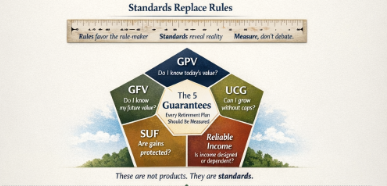
Uncapped Growth (UCG): Using multipliers like Expanded Market Participation (EMP) to turn a 10% market gain into a 15% or 20% gain for your portfolio: without the downside risk.
Why the Million Dollar Hour™ is Critical Now
The 2026 Roth catch-up rule is just one of many "interest-rate ripples" spinning like sharp knives through the financial system. You can’t predict the future value of your portfolio when losses and tax leaks are uncontrollable.
You need an engineered path.
Most people spend more time planning a two-week vacation than they do engineering a thirty-year retirement. They chase "free" advice from the internet or standard brokers who operate on 1980s logic.
We write for the Quiet Builders: the successful, financially fatigued individuals who are tired of the noise and want a plan built on micro margins and mathematical certainty. Peace is the path, and wisdom is the way.
Don't let the IRS "shrink" your paycheck and your future without a fight. It’s time to move from "participation" to "performance."
Ready for clarity instead of confusion?
The Million Dollar Hour™ is your educational, one-on-one retirement review that reveals where your plan leads : not just where it’s been.
👉 Schedule your session today.