
Net Returns After Fees, Taxes, Inflation
The Wealth Killers: How Fees, Taxes, and Inflation Quietly Drain Retirement
One of the fastest ways to uncover hidden risk is to take our 7 Question Retirement Stress Test.
![[HERO] Real Net Returns After Fees and Taxes](https://cdn.marblism.com/Z6pWCgwejrU.webp "[HERO] Real Net Returns After Fees and Taxes")
Start here: See what your retirement actually looks like → 👉 Book Your Million Dollar Hour™
If you’ve spent any time in the world of traditional investing, you’ve heard the number: 7%. It’s the "average" return of the stock market over the last century. It’s the golden carrot dangled by Wall Street to keep you participating.
But here’s the truth most Quiet Builders eventually discover: you don’t live on average returns. You live on what’s left after the Wealth Killers take their cut.
And those Wealth Killers are usually hiding in plain sight: fees, taxes, inflation, and losses from volatility. That’s the gap between what Wall Street advertises and what you can actually spend in real life. It’s the difference between a project that looks great on paper and one that actually performs under pressure. Most retirement plans are built like a Rolodex in a SpaceX world: durable in their day, but not designed for the speed, risk, and technical demands of modern retirement.
Today, we’re doing a The Margin Audit™. We’re going to look at the hidden leakages that quietly drain retirement income, explain Participation vs. Engineered Performance, and show how the Million Dollar Hour™ Forecast calculates your Net Benefit so you know exactly what you have to spend, not just what a statement says you own.
The 7% Lie: Gross vs. Net Reality
Most investors are trained to focus on the macro headlines. They watch the S&P 500 like a hawk, celebrate the up days, and grit their teeth through the down days. That’s Participation. Wall Street wants you focused on gross return because it keeps your attention off the small leaks where real wealth disappears.
Think of your portfolio like a high-performance engine. Gross return is the horsepower at the crankshaft. But by the time that power reaches the wheels, it has to move through the drag of fees, the friction of taxes, the damage of losses, and the slow erosion of inflation.
If your "engine" is losing 30% to 40% of its useful power before it reaches your lifestyle, do you really have a 7% engine? Not really. You have a much weaker engine being sold with a stronger label.
That’s why we focus on Net Benefit. Net Benefit is the amount of your wealth that is actually usable for retirement spending after the Wealth Killers have done their damage. It’s not theory. It’s what you can actually count on.
The First Leak: Fees
Wall Street thrives on hidden complexity. The more moving parts, the easier it is to hide the cost of participation. Daily research, frequent trading, layered products, advisory charges, internal expenses, and cash drag all create one thing: leakage.
On paper, a 0.8% or 1% fee may not sound like much. But that’s the single-line version, not the full picture. When you add up management fees, internal fund expenses, transaction costs, and idle cash drag, many investors are paying far more than they think.
And here’s the part that matters: a fee doesn’t just reduce this year’s return. It reduces the future compounding that money could have produced. That’s why fees are one of the most underestimated Wealth Killers.
This is where the Single Pillar vs. Multi-Pillar idea matters. Traditional banks, stocks, and real estate are often single-pillar products. Each one does one job and usually comes with either risk, cost, or inefficiency. Fully Performing Assets (FPA) are different. They’re the smartphone of finance. Just like one smartphone replaced your pager, camera, map, flashlight, and TV screen, an FPA can consolidate 5–15 pillars of value into one coordinated vehicle, often with 0% to 1.5% fees, A+ guarantees, protection, growth potential, and tax-advantaged income.
The Second Leak: Losses and The Math of Recovery
This is where the engineering mindset becomes non-negotiable. Wall Street loves average returns. But retirement math does not run on averages. It runs on actual outcomes.
If you have $1,000,000 and lose 30%, you now have $700,000. To get back to even, you do not need a 30% gain. You need a 42.8% gain. That is The Math of Recovery. It’s also called Volatility Recovery Analysis: the study of how much return and time must be spent just repairing damage.
While you are waiting for that recovery, you are losing your most valuable asset: time. And when withdrawals are happening during retirement, the problem gets worse because Sequence of Return Margin starts working against you.
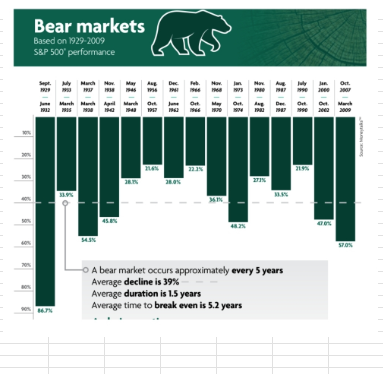
This is the core difference in Participation vs. Engineered Performance. Participation accepts the Wall Street pattern of -30% to +30% and calls it normal. Engineered Performance asks a better question: why accept avoidable damage in the first place?
Using institutional-grade ALM and modern banking architecture, we structure for 0% to +30% instead. A 0% floor removes the need to spend years digging out of a hole. When the market falls, you don’t go backward. When the market recovers, you can participate from a stable base. That’s how Compounding Efficiency improves.
The Third Leak: Taxes
Taxes are the silent partner most retirees forget to budget for. A 401(k) or IRA statement may show a large balance, but that number is often a pre-tax number, not a spendable number.
That means many people are planning retirement off the wrong figure. They think they own 100% of that account value when, in reality, the IRS may still own a meaningful share of it.
If you are in a higher bracket, or if required distributions push income upward later, a return that looked strong on paper can shrink fast after federal taxes, state taxes, and other tax impacts. This is why we say you can estimate your income needs, but you cannot predict future portfolio value with confidence when losses and leaks are outside your control.

Visual Suggestion: A bucket with four holes labeled "Fees," "Taxes," "Inflation," and "Losses," with wealth leaking out into a puddle labeled "Net Benefit Lost."
When we perform The Margin Audit™, we evaluate tax exposure not just for this year, but across retirement. The goal is not tax prep. The goal is Tax Architecture: organizing assets so more of your money remains yours to use.
If this concerns you, you’re not alone. Most people have never actually seen what their money is doing — or where it leads. 👉 In the Million Dollar Hour™, we map your exact outcome:
• Today’s value • Future income • Hidden risks • What it should be doing instead Book your session here →
The Margin Audit™: Calculating Net Benefit
The Quiet Builder does not need more hype disguised as opportunity. They need clarity. They need to know whether their structure will actually hold up.
That’s what happens inside the Million Dollar Hour™ Forecast. This is a paid, high-clarity professional review for people who want engineered answers, not free entertainment. In that 60-minute session, we move away from Wall Street’s False Model driven by fear and greed and apply institutional-grade ALM and banking architecture to your actual numbers.
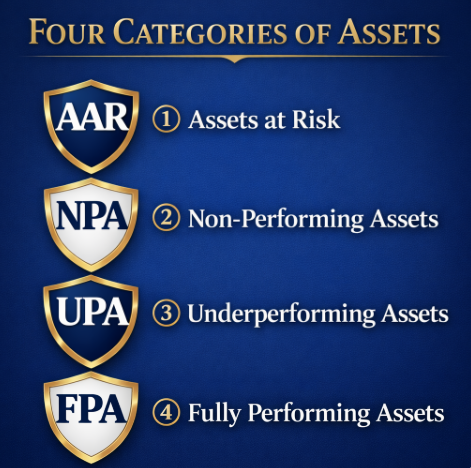
We evaluate your current allocation across four categories:
NPA (Non-Performing Assets): Cash and emergency reserves that are necessary but not fully productive.
AAR (Assets at Risk): Traditional market-based assets exposed to volatility and the Math of Recovery.
UPA (Underperforming Assets): Assets with high fees, low growth, poor tax treatment, or limited usefulness.
FPA (Fully Performing Assets): The foundation. Multi-pillar assets designed to provide growth potential, 0% floors, tax efficiency, and income strength.
Then we calculate Net Benefit. In plain English, Net Benefit is what’s left for you to actually spend after fees, taxes, inflation pressure, and market loss risk are accounted for. That’s the number most people have never been shown. They’ve been shown account values. They’ve been shown averages. They’ve been shown projections. But they haven’t been shown the spendable truth.
That’s why the Million Dollar Hour™ Forecast matters. It helps clients see exactly where they are leaking wealth, how many years have been lost to poor compounding, and what an engineered, guaranteed path can look like going forward.
Participation vs. Engineered Performance
Wall Street wants you to participate in their system. Participation means accepting noise, hidden complexity, and Sequence of Return Margin as if they are unavoidable facts of life.
We choose Engineered Performance.
Engineered Performance is designed. It is rules-based. It is built around protecting time and wealth first, then pursuing efficient growth second. It uses Expanded Market Participation (EMP), which can act as a 110% to 200% multiplier on Uncapped Gains (UCG). So if the market-linked gain is 10%, an engineered FPA structure may turn that into 11% to 20%, while still maintaining a 0% floor.
That’s not magic. It’s architecture.
And it’s why the old single-pillar model is outdated. A bank account does one thing. A stock does one thing. A rental property does one thing and asks you to babysit it on weekends. That’s the old model. FPA is the modern model: the smartphone of finance, combining multiple jobs into one coordinated system.
Peace is the path, wisdom is the way.
Stop Chasing the Macro, Start Auditing the Micro
You can estimate your income needs, but you cannot predict future portfolio value when fees, taxes, inflation, and market losses are left uncontrolled. That’s why retirement confidence does not come from more headlines. It comes from better architecture.
The Million Dollar Hour™ Forecast is built for the person who is financially fatigued by noise and ready for precision. It’s a 60-minute, $995 professional review where we perform The Margin Audit™, calculate your Net Benefit, and show what your current plan is actually built to deliver.

This is not about chasing opportunity. It’s about unlearning bad assumptions and replacing them with sound financial architecture that can last for life.
It’s time to move your wealth off Wall Street and onto Your Street. Your Money, Your Rules, In Your Time, On Your Street.
Ready for clarity instead of confusion?
The Million Dollar Hour™ is your educational, one-on-one retirement review that reveals where your plan leads — not just where it’s been.
👉 Schedule your session today.
You can keep participating… Or you can finally see the outcome. The Million Dollar Hour™ shows you exactly:
✔ Where you are ✔ Where you’re going ✔ How to fix the gaps 👉 Book your session now
Check out the Retirement Blueprint
Concerned about market losses, taxes, or income reliability?
Take the 7 Question Retirement Stress Test →