
Protect Retirement Savings from Market Crash with SUF
The Titanic Portfolio: Why Most ‘Lifeboats’ Sink with the Ship
![[HERO] The Titanic Portfolio: Why Most ‘Lifeboats’ Sink with the Ship](https://cdn.marblism.com/0U9fRXyiVwd.webp "[HERO] The Titanic Portfolio: Why Most ‘Lifeboats’ Sink with the Ship")
In 1912, the RMS Titanic was the pinnacle of engineering. The experts, the media, and the "Architects" of the day all agreed on one thing: the ship was unsinkable. It had watertight compartments. It had the latest technology. It was the safest bet on the ocean.
We all know how that story ended.
But here’s the detail most people overlook: the Titanic actually carried lifeboats. It just didn’t carry enough of them, and more importantly, those lifeboats were physically bolted to the deck of the sinking ship. When the hull was breached and the "unsinkable" vessel began its descent into the North Atlantic, those lifeboats were useless until the very last moment: and many went down with the ship because they couldn't be launched in time.
If you are currently following a "diversified" Wall Street portfolio, you aren't an Architect. You are a passenger. And your "diversification" is a set of lifeboats bolted to a ship that is currently sailing through iceberg-infested waters.
The Diversification Myth: Lifeboats Tied to the Hull
Wall Street loves the word "diversification." They tell you that if you own some stocks, some bonds, and maybe a little international exposure, you’re safe. They call these your lifeboats.
But here is the structural flaw in that engineering: In a systemic market crash, correlations go to one. This is a fancy way of saying that everything sinks at the same time.
In 2022, we saw this play out in real-time. Stocks went down. Bonds: the "safe" asset: went down. Real estate started to wobble. The lifeboats were tied to the sinking hull. If you were a "Participant" in that market, you didn't have a safety strategy; you had a front-row seat to a math problem you couldn't solve.
Traditional diversification is a "Rolodex in a SpaceX world." It was a fine idea in the 1980s when markets were less interconnected and moving parts were slower. Today, high-frequency trading and global systemic risk mean that when the iceberg hits, the whole ship tilts.
The Math of Recovery: Why 0% is the Hero
Most investors are taught to chase "opportunity." They want the 12% gain, the 15% win, the "Uncapped Growth." But they ignore the most important law of financial physics: The Math of Recovery.
If your portfolio takes a 30% hit: which the S&P 500 has done with painful regularity: you don't just need a 30% gain to get back to where you started.
A 10% loss requires an 11% gain to break even.
A 20% loss requires a 25% gain to break even.
A 30% loss requires a 43% gain to break even.
While you’re waiting five years just to get back to "even," the Architect who engineered a floor is already miles ahead. This is why we say 0% is the Hero. In a year where the market drops 20%, a return of 0% isn't "staying flat": it’s a 20% victory over the rest of the field.
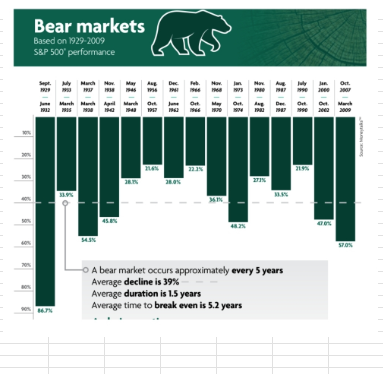
As the chart above shows, bear markets aren't "black swan" events; they are features of the system. They happen roughly every five years. If you are 55 or 65, you don't have the "Time Margin" to wait 5.2 years just to break even after the next iceberg.
Introducing SUF: The Stepped Up Floor
At Your Street Wealth, we don't believe in "Participation" (hoping the ship doesn't sink). We believe in "Engineered Performance."
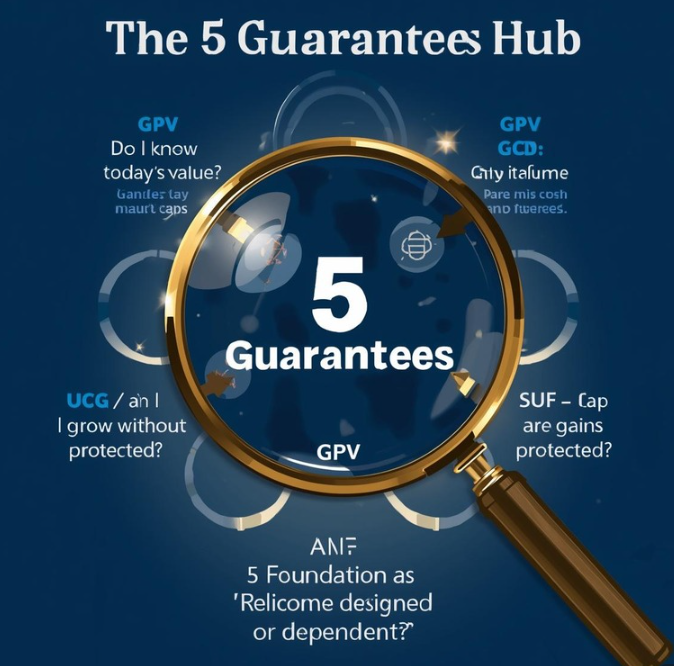
One of our 5 Guarantees is SUF, which stands for Stepped Up Floor (and as we like to say, keeping your money Safe Under Foot).
Imagine an elevator. As the market goes up, the elevator goes up. But this elevator is fitted with a permanent, one-way ratchet system. Once you reach a new floor of wealth, the floor "steps up" and locks in place. If the cable snaps (a market crash), the elevator doesn't plummet to the basement. It stays exactly where it is.
SUF means:
Protected Gains: When the market has a winning year, those gains are locked into your principal. They become part of your new "floor."
No Market Losses: When the market crashes 30%, your account stays at 0%. You don't participate in the downside.
Volatility Recovery Analysis: Because you never lose principal, you don't have to "recover." You start the next growth cycle from your highest point, not from a hole in the ground.
The Architect vs. The Participant
The difference between a "Participant" and an "Architect" comes down to how they handle risk.
The Participant listens to the headlines. They are driven by the "Greed/Fear meter." When the market is high, they feel greedy and take on too much risk. When the market hits an iceberg, they feel fear and sell at the bottom. They are passengers on the Titanic, hoping the captain knows what he’s doing.
The Architect uses a Margin Audit™. They don't care about the headlines because they’ve engineered the outcome. They know that their retirement isn't dependent on the market's mood, but on the structural integrity of their assets.
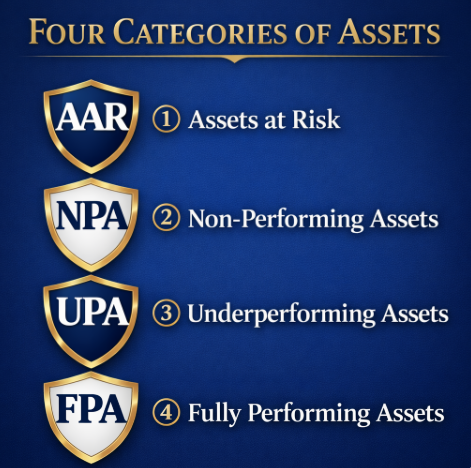
We categorize assets into four groups:
AAR (Assets at Risk): The "Teens" of your portfolio. They are volatile and unpredictable.
NPA (Non-Performing Assets): Cash under the mattress or low-yield accounts that don't keep up with inflation.
UPA (Underperforming Assets): High-fee, high-tax, or single-pillar investments.
FPA (Fully Performing Assets): The "Foundation." These are multi-pillar assets that provide growth, safety, and tax efficiency in one vehicle.
The Danger of Sequence of Returns Risk
The biggest threat to a "Quiet Builder" approaching retirement isn't just a market crash: it’s the timing of the crash. This is called Sequence of Returns Risk.
If the market crashes while you are still working, you have time to wait it out (if you have the stomach for it). But if the market hits an iceberg in the first three years of your retirement: while you are simultaneously taking withdrawals for income: the math becomes catastrophic. You are selling shares at a discount to pay for your life, which hollows out your portfolio so deeply that it can never recover, even if the market bounces back later.
A Stepped Up Floor eliminates this risk. By engineering a floor that is "Safe Under Foot," you ensure that your income isn't coming from a shrinking bucket. You are withdrawing from a position of strength, not a position of "recovery."
Consolidation of Technology: The Financial Smartphone
Think about your life in the year 2000. You had a pager, a camera, a Discman, a map in the glovebox, and a cell phone that could only make calls. Today, all of that is consolidated into one smartphone.
Traditional Wall Street is still trying to sell you the pager (the bond) and the Discman (the mutual fund). They are "single-pillar" products. They do one thing, often poorly, and they don't talk to each other.
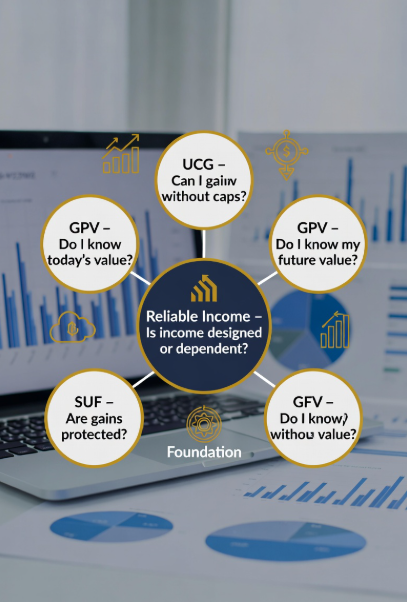
Fully Performing Assets (FPA) are the "smartphones" of the financial world. They consolidate 5–15 pillars of value: like Uncapped Gains (UCG), Stepped Up Floors (SUF), and tax-free income: into a single, engineered vehicle.
This isn't a "product" your broker is going to tell you about. Why? Because the broker makes money on the "Participation." They make money when you buy, sell, and worry. They don't make money when you have a guaranteed floor and no reason to call them in a panic.
Peace is the Path, Wisdom is the Way
You’ve worked too hard and built too much to remain a passenger on an unsinkable myth. The "Quiet Builders" we work with are financially fatigued. They are tired of the noise, the fees, and the feeling that their future is tied to a "Greed/Fear meter" they can't control.
The transition from Participant to Architect begins with a single hour of high-clarity engineering. We call it the Million Dollar Hour™ Forecast.
This isn't a sales pitch; it’s a Margin Audit™. We look at your current "Lifeboats" and determine if they are bolted to the hull or if they are truly designed to keep you afloat. We run a Volatility Recovery Analysis to show you exactly how much time and wealth you are risking under your current "rules."
Your money should follow your rules, in your time, on your street. Don't wait for the iceberg to find out if your portfolio is truly unsinkable.
Ready for clarity instead of confusion?
The Million Dollar Hour™ is your educational, one-on-one retirement review that reveals where your plan leads : not just where it’s been.
👉 Schedule your session today.