
Sequence of Returns Risk in Retirement
Loss Bends Time: The Hidden Geometry of Your Retirement Trajectory
Start here: See what your retirement actually looks like → 👉 Book Your Million Dollar Hour™
![[HERO] Loss Bends Time: The Hidden Geometry of Your Retirement Trajectory](https://cdn.marblism.com/1Tx95xzhKhG.webp "[HERO] Loss Bends Time: The Hidden Geometry of Your Retirement Trajectory")
One of the fastest ways to uncover hidden risk is to take our 7 Question Retirement Stress Test.
Artemis II Return and the Tiny Income Window That Can Make
When a pilot takes off from New York bound for Los Angeles, a tiny one-degree error in the heading might seem insignificant on the runway. But as that plane traverses the continent, that one degree doesn’t just stay a one-degree nuisance. It bends the trajectory. By the time the pilot expects to see the Hollywood sign, they’re actually staring at the beaches of Baja, Mexico.
In the world of retirement planning, market losses act exactly like that one-degree error. But it’s worse than just ending up in the wrong city. In retirement, loss bends time.
Most people view a 10% or 20% market dip as a "temporary setback" or just a number on a statement. They’ve been conditioned by Wall Street to believe in "participation": the idea that if you just stay buckled in, the "averages" will eventually get you to your destination.
But Wall Street is giving you a 2D map for a 3D problem. They look at the "what" (the percentage), while ignoring the "when" (the sequence) and the "how long" (the recovery). At Your Street Wealth, we don’t look at your retirement as a series of random events. We look at it as a flight path that requires precision engineering.
Pyramid vs Triangle

The 2D Trap vs. The 3D Reality
Traditional financial planning is built on a "False Model." It relies on historical averages and the hope that the future will look like a neat, upward-trending line. This is 2D thinking.
Frank uses a simple aircraft-plot metaphor here: if you look at only a tiny slice of a long flight, maybe 1/40th of the route, the line can appear straight on a flat map. But the earth is not flat, and the actual flight path across a 3D world is curved from beginning to end. In fact, it’s curved even more than most people realize, because you are not flying over a stationary surface. You’re navigating around a rotating Earth that is also orbiting through space at roughly 30,000 mph. The small segment hides the truth of the full trajectory.
That is exactly how Wall Street "dumbs down" retirement planning. Their straight-line projections are flat-earth thinking. They keep people staring at one year at a time, one statement at a time, one average return at a time, so the path looks harmless and linear. But retirement is not a one-year event. It is a 30- to 40-year flight path, and the full curve matters. When you zoom out, the hidden bends show up: losses, withdrawals, taxes, fees, inflation, and timing risk.
And if you don’t account for the rotation of taxes and the orbit of inflation, you won’t land where you intended. You may have a nice-looking projection on paper and still miss the actual destination in real life.
The 3D reality of retirement includes a critical variable: sequence of returns risk: or what we also call your Sequence of Return Margin.
That distinction matters most in the "return" phase of the journey. Think about the recent Artemis II return planning headlines. A spacecraft coming home cannot just point vaguely at Earth and hope for the best. It has to hit a very narrow re-entry window. Too steep, and it burns up. Too shallow, and it skips off the atmosphere like a rock on a lake. Close is not good enough.
Retirement income works the same way. You also need to hit a precise income window. Withdraw too aggressively after market losses, and the plan burns up early. Depend too much on average returns, and the portfolio can bounce off reality and leave you short when income is actually needed.
Research shows that the first 5 to 10 years of your retirement are your "Fragile Decade." This is your retirement re-entry phase. It’s the period where the heat builds fast. You have the largest amount of capital you’ve ever managed, but the shortest amount of time to recover from a hit. If you take a 20% loss in your first year of retirement while simultaneously withdrawing 4% for living expenses, you haven't just lost 24% of your money. You have fundamentally altered the geometry of your future.
That’s why sequence of returns risk is so dangerous. Loss bends time. Loss doesn’t just reduce your account balance; it changes how long your money has to work, how much income it can support, and how precise your future decisions now have to become. The trajectory is curved, just like a flight path around a rotating, orbiting Earth. When a loss happens early, it is not a little dent on a straight line. It changes the curve of the whole trip.
Think of it like flight physics. A market loss is a sudden loss of lift. Taxes and fees are the constant drag on the airframe. One hits hard and fast. The others keep pulling on the structure mile after mile. Together, they physically warp the timeline of the mission. That’s why recovery is not just about luck or waiting for better headlines. It is a matter of physics.
There is also a time-zone effect here that most people miss. On a long-haul flight, you can cross enough time zones to feel like a day disappeared. A market crash does something similar to retirement. It steals the biological time you wanted to spend living, traveling, resting, giving, and enjoying your family. That loss is not abstract. It is lifespan, translated into financial pressure.
Wall Street is the antithesis of retirement success here because its model depends on keeping you focused on the short segment instead of the full curve. If they can keep your eyes on the next 12 months, they can hide what the next 40 years actually demand.
In spacecraft terms, this is where you need a heat shield. During re-entry, the shield absorbs the friction that would otherwise destroy the vessel. In retirement, your heat shield is the part of your architecture designed to handle the friction of taxes, market loss, and forced withdrawals during the Fragile Decade. Without a real shield, the math gets ugly fast.
When you sell assets in a down market to pay for groceries or golf, you are locking in permanent capital erosion. That money is gone. It can no longer compound. It can no longer support you. You’ve created a "gap" in your foundation that no amount of "market recovery" can fully patch, because the underlying shares that would have participated in the recovery are no longer in your account.
The Math of Recovery: Why "Breaking Even" is a Lie
Wall Street loves to talk about "participation," but they rarely talk about the Math of Recovery.
Let’s look at the physics of a loss. If you have $1,000,000 and you lose 30%, you have $700,000. To get back to $1,000,000, you don’t need a 30% gain. You need a 42.8% gain just to get back to where you started.
If you lose 20%, you need a 25% gain to get back to even on paper. But that’s only the first half of the story. You also have to account for the time lost while waiting for that recovery to happen. In retirement, that waiting period is not harmless. It is expensive. You are still aging. You are still paying bills. You are still taking withdrawals. So the real question is not, "Can my account recover?" The real question is, "Where do I find the years I lost while it was trying?"
If you lose 50%, you need a 100% gain to break even.
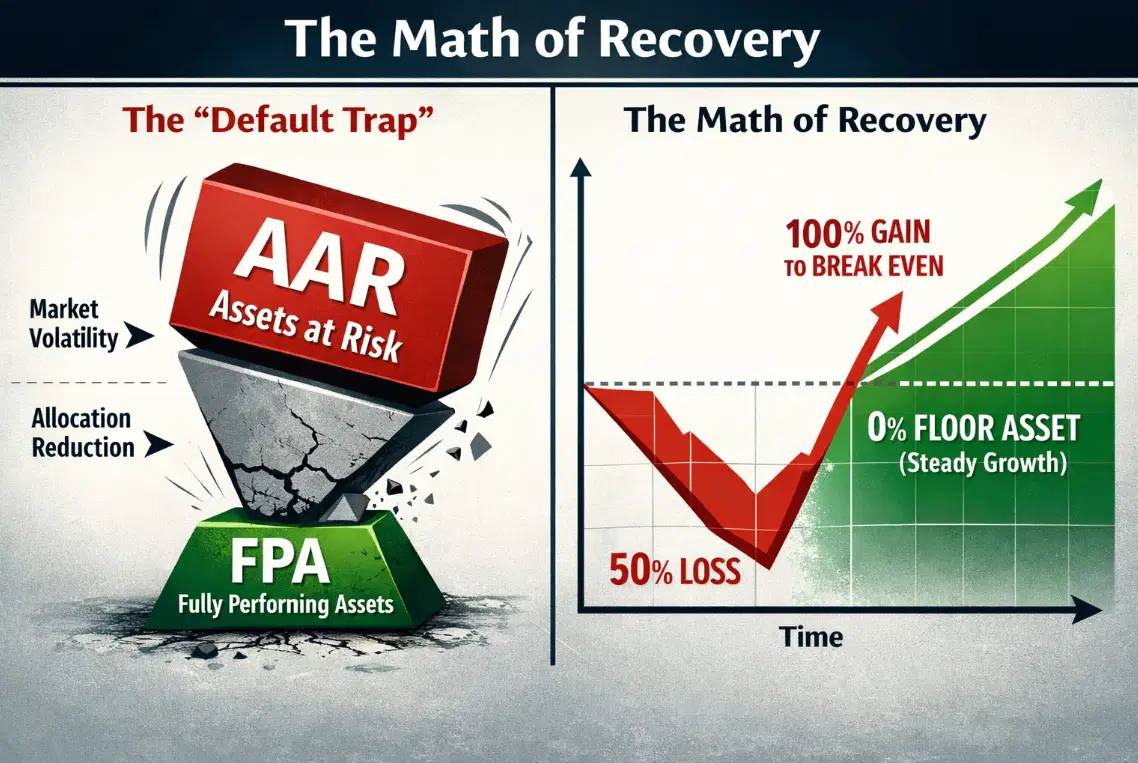
This is what I call "spinning sharp knives." While you wait for that 25%, 42% or 100% gain to happen, time is passing. Inflation is eating your purchasing power. Fees are being extracted. You are getting older. The "time" you lost waiting for the recovery is time you can never buy back. In a very real sense, a market loss is a time-travel event that pushes your "peace of mind" destination further into the future: or off the map entirely.
That is why "Loss Bends Time" is not just a clever phrase. It is a literal subtraction from the years you hoped to enjoy with freedom. Just as a flight across time zones can make a day vanish, a major loss can make part of your retirement vanish. Wall Street calls that normal. We call it unacceptable.
A pilot has to account for drag, lift, gravity, fuel burn, earth rotation, and even the influence of larger bodies when precision matters. An Architect has to do the same with retirement. If you ignore the variables Wall Street calls "too complex" : taxes, fees, inflation, volatility, and withdrawal timing : you are not simplifying the problem. You are hiding the physics.
The Valleys: A Pilot’s Perspective on Risk
In aviation, there are certain areas called "dead man’s valleys": low-altitude corridors where, if an engine fails, you have zero options.
Wall Street invites you to fly through these valleys every day, claiming the "view" (the potential upside) is worth the risk. They use hidden complexity to keep you addicted to the daily news cycle, chasing the next "opportunity" while ignoring the structural integrity of your plane.
An architect or a pilot doesn't focus on "opportunity" first; they focus on Engineering Certainty.
Instead of "Assets at Risk" (AAR), which are single-pillar assets like stocks or mutual funds that can drop 30% overnight, we focus on Fully Performing Assets (FPA).
Think of traditional assets (Banks, Stocks, Real Estate) as a "Rolodex in a SpaceX world." They were fine for the 1950s, but they are single-pillar tools. If the stock market drops, your stock "pillar" crumbles. If interest rates rise, your bond "pillar" snaps.
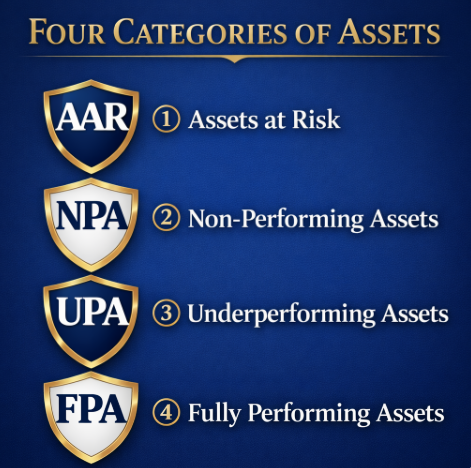
An FPA is like the smartphone of finance. Just as your phone consolidated your camera, pager, map, and computer into one device, an FPA consolidates 5 to 15 "pillars" of value: growth, protection, tax-free income, and long-term care: into a single vehicle.
Aiming Where the Target WILL Be: The Artemis II Principle
When NASA sends the Artemis II mission to the moon, they don’t aim the rocket at where the moon is right now. If they did, they’d hit empty space. They aim for where the moon will be when the rocket arrives.
And on the return trip, the precision gets even tighter. Re-entry is not a vibes-based exercise. The capsule must enter a narrow corridor at the right angle, speed, and timing. That’s a good picture of retirement decumulation. The "return" phase of retirement is where most people fail because they use 2D maps : average returns, generic withdrawal rules, and hope : for a 3D re-entry problem.
And if everything goes right, the mission ends in splashdown: controlled, intact, and recoverable. That’s a much better picture of retirement than crossing your fingers and hoping the portfolio doesn't catch fire on the way down. Good retirement architecture should not feel like a crash landing. It should feel like a guided return.
Your retirement plan needs the same level of trajectory logic. You can't plan based on where you are today at age 55 or 65. You have to aim for the version of you at age 85: the version of you that needs guaranteed income, tax efficiency, and zero market volatility.
This is the difference between Participation vs. Engineered Performance.
Participation is gambling that the wind stays at your back.
Performance is designing a craft that moves forward regardless of which way the wind blows.
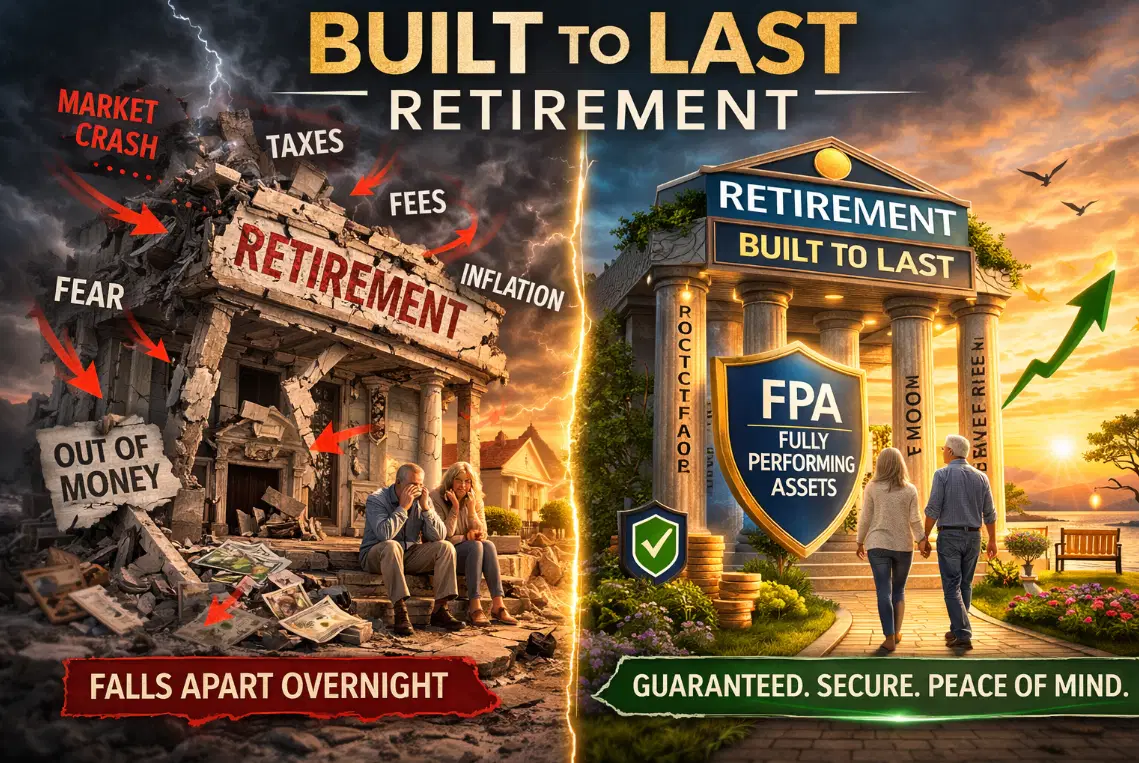
And here’s the part Wall Street usually skips: market volatility is a lot like cosmic radiation. You can’t always see it. It doesn’t announce itself with a drumroll. But over a long voyage, it degrades the vessel. Small hits compound into structural fatigue. In retirement, those invisible stressors are volatility, fees, taxes, and badly timed withdrawals. Left unchecked, they quietly weaken the system right when you need strength most.
That’s why heat-shield thinking matters. A real retirement re-entry plan is not just about chasing lift. It’s about surviving friction. If taxes rise, if markets crack, or if income timing gets ugly, your architecture should be built to absorb that heat instead of transferring it directly to your lifestyle.
We use a strategy that shifts the conversation from "-30% to +30%" (the Wall Street roller coaster) to "0% to +30%." By engineering a floor of 0%, we ensure that your trajectory never bends downward. When the market drops, you stay level. When it rises, you participate in Uncapped Gains (UCG) and Expanded Market Participation (EMP), which can act as a 110% to 200% multiplier on those gains.
The Margin Audit™: Finding the Leaks
Most "Quiet Builders": those of you who have worked hard, saved well, and are now feeling a bit financially fatigued: don't realize that their flight path is being weighed down by "drag."
This drag comes in the form of:
Volatility Leaks: The math of recovery we discussed earlier.
Tax Leaks: Future tax rates that could double, cutting your spendable income in half.
Fee Leaks: The 1% to 2% AUM fees that Wall Street charges whether you win or lose.
Through our Margin Audit™, we scrutinize these micro-margins. Wealth isn't built on macro headlines; it’s built on the engineering of these small efficiencies. We look for the "gap" in your current plan: the place where your money is falling through the floor: and we close it.
This is also where we reveal the hidden variables others refuse to mention. Most advisors show you a straight line and call it a plan. We show you the curved trajectory and the real forces acting on it: volatility, withdrawal timing, tax rotation, inflation orbit, and compounding drag. In plain English, losses hit like lost lift, while taxes and fees keep acting like drag on the frame. That is what physically bends the timeline and steals years from the recovery process. That is what the Billion Dollar Hour is built to uncover. It is where hidden variables stop being hidden.
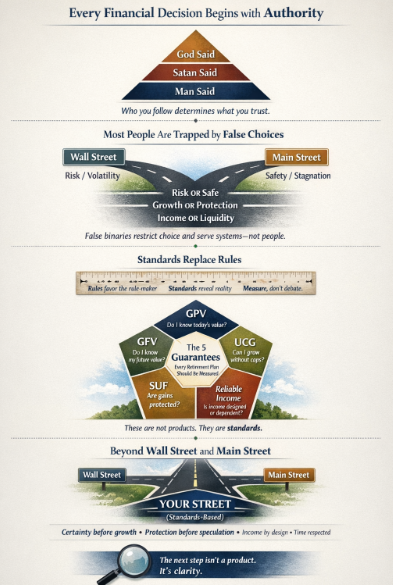
Are You Ready to Unlearn the Myths?
Wall Street has spent billions of dollars making finance seem like a mystery that only they can solve. They want you focused on "market participation" because that’s how they collect fees. They sell you "hope" disguised as "diversification."
But hope is not a strategy. Engineering is.
We invite you to step out of the 2D world of averages and into the 3D world of certainty. This isn't about chasing the next hot stock; it’s about The Million Dollar Hour™ Forecast. It’s where we expose the variables Wall Street leaves out of the picture, because once you can see the real curve, you can finally engineer the right landing.
In one 60-minute session, we conduct a high-friction, high-clarity audit of your financial architecture. We don't look for "free cheese": we look for truth. We filter for those who are ready to pay for a scrutinized, certain plan rather than a "free" opinion that costs them years of lost time. The Billion Dollar Hour™ is where we stop the clock, identify what is stealing your future, and reclaim your trajectory.

Peace is the Path, Wisdom is the Way. That means refusing to participate in a system that gambles with your time. It’s time to stop letting market losses bend your time and start engineering a trajectory that lands exactly where you want to be.
Remember the mantra: Your Money, Your Rules, In Your Time, On Your Street.
Don't let your retirement be a "participation" trophy for Wall Street. Make it an engineered masterpiece.
For more information on how to optimize your retirement hours, visit our resource on the Million Dollar Hour.
Ready for clarity instead of confusion?
The Million Dollar Hour™ is your educational, one-on-one retirement review that reveals where your plan leads — not just where it’s been.
👉 Schedule your session today.
Concerned about market losses, taxes, or income reliability?
Take the 7 Question Retirement Stress Test →
You can keep participating… Or you can finally see the outcome. The Million Dollar Hour™ shows you exactly:
✔ Where you are ✔ Where you’re going ✔ How to fix the gaps 👉 Book your session now
Check out the Retirement Blueprint