
Superlative Stock Syndrome: The Childhood Lie That’s Sabotaging Your Retirement
Superlative Stock Syndrome: The Childhood Lie That’s Sabotaging Your Retirement
![[HERO] Superlative Stock Syndrome: The Childhood Lie That’s Sabotaging Your Retirement](https://cdn.marblism.com/3V_lNDcGOms.webp "[HERO] Superlative Stock Syndrome: The Childhood Lie That’s Sabotaging Your Retirement")
Do you remember the first time you were told that "risk is good"? It probably started somewhere between a lemonade stand and your first summer job. You were told that if you wanted to grow your money, you had to be "brave." You had to put it in the market and let it ride.
We call this Superlative Stock Syndrome (SSS).
It’s the psychological conditioning that begins at an early age, convincing you that financial growth and market risk are inseparable twins. You’ve been told that the stock market is the only path to a "superlative" retirement. But here’s the truth: SSS is a deception. It’s a childhood lie that forces you to throw your future under a metaphorical bus while Wall Street holds the bus fare.
At Your Street Wealth, we work with "Quiet Builders", successful people who are financially fatigued by the "win-some, lose-most" roller coaster of traditional investing. If you’ve been feeling like your 401k is a "Win/Lose" platform where you take all the risk and they take all the fees, you’re not crazy. You’re just waking up from the SSS trance.
The "7% Average" Deception
Wall Street experts love to throw around the number "7%." They tell you that, historically, the market goes up by about 7% to 10% on average every year. It sounds so safe, doesn't it? It sounds like a steady climb up a mountain.
But there is a massive, gaping chasm between an "average return" and an "actual return."
Imagine you have $100,000. In Year One, the market drops 50%. You now have $50,000. In Year Two, the market goes up 50%. Your "average" return is 0% ((-50 + 50) / 2). But your actual account balance? It’s $75,000. You are still down $25,000.
Average returns are a mathematical myth used to keep you in the game.
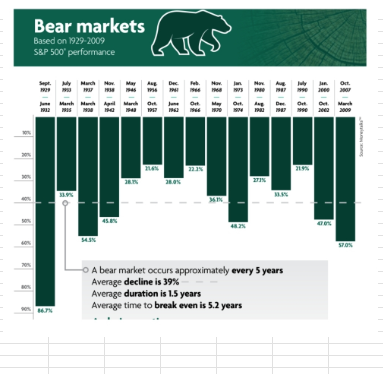
In reality, the market doesn't climb a mountain; it's more like spinning sharp knives. SSS conditions you to ignore the "Where is the risk?" question. The risk exists in the 10-20% retractions that happen every 18 months and the 35-40% gut-punches that happen every 5-6 years on average.
The Math of Recovery: Why Losses Cost More Than Gains
Most people think that if they lose 20%, they just need a 20% gain to get back to even. That is the fundamental failure of Superlative Stock Syndrome.
In the world of Volatility Recovery Analysis, the math is much crueler:
A 10% loss requires an 11% gain to recover.
A 30% loss requires a 43% gain to recover.
A 50% loss requires a 100% gain just to get back to where you started.
While your portfolio is going down, sideways, and (hopefully) back up, you are losing the one thing you can never get back: Time.
If it takes you five years to recover from a major market crash, those are five years of your life where your money wasn't growing. It was just healing. Wall Street calls this "participation." We call it "running in place while someone else picks your pocket."
Meet Wall St Wally: The Conflict of Interest
Why doesn't your broker tell you this? Why do they keep pushing the SSS narrative?
Because it’s not in their financial interest to tell you there’s a better way. Traditional brokers operate on a "False Model" driven by the noise of macro headlines. They want you addicted to the daily research, the buying, and the selling.

Your broker is like a casino host. Whether you hit the jackpot or lose your shirt, the house still gets its cut. Your 401k provider and your brokerage firm benefit from your participation while you shoulder 100% of the Sequence of Return Margin risk. If the market drops the year before you retire, the broker still goes to lunch. You? You might have to work another five years.
The "Smartphone" of Finance: From Single-Pillar to Multi-Pillar
Think about the technology we used 30 years ago. You had a pager, a camera, a calculator, a map, and a phone. Today, all of those are consolidated into one smartphone.
Traditional retirement planning is like carrying around a Rolodex in a SpaceX world. It’s outdated. Stocks, banks, and real estate are "Single-Pillar" assets. They do one thing, and they often come with high fees and high risk.
We advocate for Fully Performing Assets (FPA). These are the "smartphones" of the financial world. An FPA can provide 5 to 15 pillars of value, including growth, protection, and tax-free income, all within one vehicle.
Instead of the traditional "Win/Lose" platform where you hope for a +30% year while fearing a -30% crash, FPA strategies are engineered for a 0% to +30% range. This is what we call Engineered Performance. You participate in the upside (often with Uncapped Gains and multipliers), but when the market takes its scheduled 18-month nap, your floor is 0%.
You never have to use your time to recover lost wealth.
Looking Back at Your Future
No one knows when the next crash will happen. No one knows why or how much it will go down. You can only look back to see the reliability of losses.
So, why do we keep looking back at the market’s history to predict our future?
The answer is to move forward and look back at your future. This sounds like a riddle, but it's actually about engineering. When you build a bridge, you don’t "hope" it stays up based on how other bridges performed in the 1920s. You engineer it with precision to handle the weight it’s designed to carry.
Your retirement should be no different. You shouldn't be "participating" in a market; you should be relying on a design.
The Margin Audit™: Is There a Better Way?
Quiet Builders rarely seek a better solution because they’ve been conditioned to believe one doesn't exist. They worry every day, checking their apps, watching the Greed/Fear meter, and feeling that nagging unease that they are "spinning sharp knives."
The question you need to ask is: Is there a better way?
Yes, there is. But your broker won’t tell you about it because it requires shifting from "Opportunity" language to "Engineering" language. It requires a Margin Audit™ to find the leaks in your current plan: the fees, the taxes, and the unnecessary volatility.
The Million Dollar Hour™ Forecast
If you are tired of the Superlative Stock Syndrome and ready to unlearn the myths that are sabotaging your peace of mind, it’s time for a different kind of conversation.
We don't do "free consultations" that are just thinly veiled sales pitches. We provide a high-friction, high-clarity professional service called the Million Dollar Hour™ Forecast.
For $995, we conduct a full Engineering Audit of your financial architecture. We don’t look at "macro headlines"; we look at your micro margins. We answer the questions Wall Street avoids:
What is the Today’s Future Value of your current path?
Where are the gaps in your Compounding Efficiency?
How can we move you from a "Single-Pillar" risk model to a "Multi-Pillar" guaranteed model?

This is about moving from "Participation" (gambling) to "Performance" (architecture). It’s about realizing that Peace is the path, and wisdom is the way.
Don't let a childhood lie dictate your second act. It’s your money, and it should be on your street, under your rules.
Ready for clarity instead of confusion?
The Million Dollar Hour™ is your educational, one-on-one retirement review that reveals where your plan leads : not just where it’s been.
👉 Schedule your session today.