
Why AI Trading Fails in Retirement Planning
The AI Trading Trap: Why Rules Can’t Fix a Broken Architecture
![[HERO] The AI Trading Trap: Why Rules Can’t Fix a Broken Architecture](https://cdn.marblism.com/CpzohYAy6oX.webp "[HERO] The AI Trading Trap: Why Rules Can’t Fix a Broken Architecture")
Start here: See what your retirement actually looks like → 👉 Book Your Million Dollar Hour™
If you’ve turned on a computer or looked at a financial headline in the last six months, you’ve heard the hype: AI is going to revolutionize the way we trade. The promise is seductive. They tell you that sophisticated algorithms can now hunt for guaranteed investment returns by processing millions of data points in a millisecond.
But here’s the reality that Wall Street doesn’t want you to know: AI is just a brain. The stock market is the body. And no matter how smart the brain is, if the body is built on a fundamentally broken architecture, the system will eventually fail.
At Your Street Wealth, we look at the world through the lens of institutional-grade engineering. And from an engineering perspective, the current push for AI trading isn’t a solution: it’s a trap.
The Rule Paradox: When Logic Meets a Losing Game
AI operates on rules. If "X" happens, then do "Y."
I’ve been hearing a lot of promotion lately about how AI can "guarantee" you won’t lose money in the market. But let’s look at the math. If an AI buys a stock at a high price and it is programmed with a rule that it is "not allowed to lose money," there is only one logical way to satisfy that rule if the stock price drops: It cannot sell.
Think about that for a second. If you buy a position at $100 and it drops to $70, the only way to avoid "realizing" a loss is to sit on it and wait. This is where the architecture of Wall Street betrays you. You aren’t just losing money; you are losing time.
Wall Street is a Win/Lose platform. It thrives on volatility, fees, and the constant churn of buying and selling. When you try to apply "safety rules" to a platform designed for risk, you end up trapped in a "loss position," holding onto an asset forever because the architecture doesn't allow for a true exit without a scar.
Architecture vs. Participation
Most retirement planning for business owners and successful professionals is based on "Participation." You are told to "participate" in the market, "participate" in the upside, and: unfortunately: "participate" in the crashes.
Wall Street uses hidden complexity and the "next big thing" (like AI trading) to keep you addicted to the daily research and the noise. They want you to believe the myth that "you can't increase return without increasing risk."
But that’s a false model. In the world of engineering, we don't just "participate" in a bridge and hope it stays up; we engineer it to stand.
When you move from Participation to Engineered Performance, the rules change. You stop trying to add "safety rules" to a risky platform and instead move your wealth to a Win/Win architecture.
The Math of Recovery (Why "Almost" Breaking Even is a Disaster)
Let’s talk about the Volatility Recovery Analysis. This is the cold, hard math that Wall Street hides behind those colorful "average return" charts.
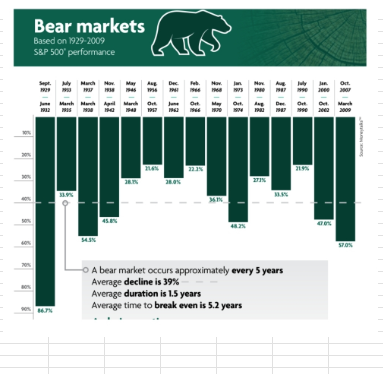
If you lose 30% of your portfolio in a market crash, you don't need a 30% gain to get back to zero. You need a 42.8% gain just to get back to where you started. If you lose 50%, you need a 100% gain to break even.
This is the "Math of Recovery," and it is the primary reason why traditional stock-based models fail "Quiet Builders": those of you aged 45-75 who have worked hard and just want to protect retirement savings from market crash events.
When you use AI to trade within a Win/Lose architecture, you are still subject to this math. The AI might be faster than a human at clicking "buy," but it cannot change the fact that a 30% drop requires a massive uphill climb to recover.
If this concerns you, you’re not alone. Most people have never actually seen what their money is doing — or where it leads. 👉 In the Million Dollar Hour™, we map your exact outcome:
• Today’s value • Future income • Hidden risks • What it should be doing instead Book your session here →
The Smartphone of Finance: From Single-Pillar to Multi-Pillar
Think back to the 1990s. If you wanted to make a call, you used a phone. If you wanted to send a page, you used a pager. If you wanted to take a photo, you used a camera. These were "single-pillar" tools. They did one thing, and if one broke, you had to replace it.
Traditional assets: Banks (AAR), Stocks (UPA), and Real Estate (NPA): are like those old tools. They are "single-pillar" assets.
A bank gives you safety but no growth.
A stock gives you potential growth but no protection.
Real estate gives you equity but often lacks liquidity.
Wall Street and traditional banks are still selling you "a Rolodex in a SpaceX world." They are trying to fix modern retirement problems with 1980s-era thinking.
The alternative is what we call Fully Performing Assets (FPA). This is the "smartphone" of the financial world. An FPA is a multi-pillar asset that can provide 5 to 15 different "pillars" of value: such as growth, protection, tax-free income, and long-term care: all inside one vehicle.
In an FPA architecture, you get Uncapped Gains (UCG) and often Expanded Market Participation (EMP). Imagine if the market goes up 10%, but because of your wealth architecture, your multiplier gives you 15% or 20%. And if the market drops 20%? You stay at 0%. You don't participate in the loss. That is the difference between a rule-based AI and a fundamentally sound architecture.
The Million Dollar Hour™: Engineering Your Certainty
You can estimate your income needs all day long, but you can never truly predict your future portfolio value when you are dealing with uncontrollable "leaks" like market volatility, rising taxes, and hidden fees.
The AI traders want you to believe they’ve solved the puzzle, but they are just rearranging the deck chairs on a ship built to sink during a storm.
If you are a "Quiet Builder" who is tired of the noise, the greed/fear meter of the headlines, and the constant feeling that your time is being traded for someone else's profit, it’s time to stop participating and start engineering.
We offer a professional service called the Million Dollar Hour™. This isn't a "free consultation" where we try to sell you a mutual fund. It is a $995 high-precision Engineering and Margin Audit.
In 60 minutes, we do the heavy lifting that Wall Street avoids:
The Compounding Efficiency Audit: Where is your money leaking?
Volatility Recovery Analysis: How long would it take you to recover from the next "once-in-a-decade" crash that happens every five years?
Sequence of Return Margin: Can your plan survive a down market in the first three years of your retirement?
Peace is the Path, Wisdom is the Way
Rules cannot supersede architecture. If the foundation of your retirement is built on a Win/Lose platform, no amount of AI-driven "rules" will save you when the system moves against you. You will either lose your money or you will lose your time: and in retirement, time is the one thing you can't earn back.
You don't need a faster way to trade; you need a better way to build.
It’s time to unlearn the myths of "high risk equals high return." It’s time to embrace the precision of Asset Liability Management (ALM) and banking architecture.
Move your wealth off their street and onto Your Street.

Your Money, Your Rules, In Your Time, On Your Street.
Ready for clarity instead of confusion?
The Million Dollar Hour™ is your educational, one-on-one retirement review that reveals where your plan leads : not just where it’s been.
👉 Schedule your session today.
You can keep participating… Or you can finally see the outcome. The Million Dollar Hour™ shows you exactly:
✔ Where you are ✔ Where you’re going ✔ How to fix the gaps 👉 Book your session now