
Your Retirement Start Date is a Ticking Time Bomb
The Day One Disaster: Why Your Retirement Start Date is a Ticking Time Bomb
One of the fastest ways to uncover hidden risk is to take our 7 Question Retirement Stress Test.
![[HERO] The Day One Disaster: Why Your Retirement Start Date is a Ticking Time Bomb](https://cdn.marblism.com/nkeM2Lcinx5.webp "[HERO] The Day One Disaster: Why Your Retirement Start Date is a Ticking Time Bomb")
Start here: See what your retirement actually looks like → 👉 Book Your Million Dollar Hour™
You’ve spent forty years climbing the mountain. You’ve endured the cubicles, the commutes, and the "synergy" meetings that could have been emails. You’ve checked your 401(k) statements like a hawk, and finally, the numbers say you’ve made it. You put in your notice, buy the "World’s Best Retiree" mug, and prepare to coast.
And then, Day One happens.
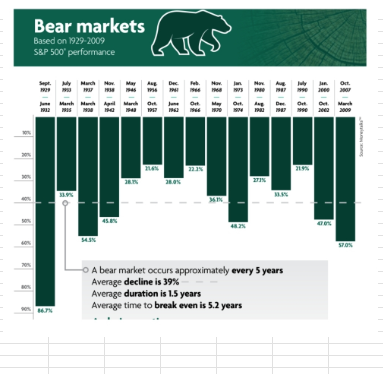
On Day One of your retirement, the market decides to take a 20% dive. Wall Street calls it a "correction." Your broker tells you to "stay the course" and "wait for the recovery." But there’s a massive, expensive problem with that advice: You can’t wait for a recovery when you need to pay for groceries today.
Welcome to the Sequence of Returns Risk (SORR): the silent "Wealth Killer" that turns your retirement start date into a ticking time bomb.
The Averages Lie: Why Your Broker’s Math is Broken
Wall Street loves to talk about "average returns." They’ll tell you the S&P 500 averages 7% to 10% over the long haul. That sounds great when you’re 35 and accumulating wealth. If the market drops, you just keep buying cheaper shares. Time is your friend.
But the moment you flip the switch from saving to spending, the math changes. "Averages" become a dangerous distraction.
Imagine two retirees, Smith and Jones. Both have $1 million. Both average a 7% return over 20 years.
Smith experiences the "good" years at the start of his retirement.
Jones hits a bear market in his first three years.
Even though their average return is the same, Jones could run out of money 10 years earlier than Smith. Why? Because Jones was forced to sell his stocks while they were down to generate his retirement income.
When you withdraw money from a shrinking pot, you are effectively "cannibalizing" your principal. You aren't just losing the money you spent; you’re losing the future compounding power of that money. This is the Timing Trap, and it’s a disaster that most traditional retirement plans aren't designed to survive.
The Math of Recovery: The Hole You Can’t Climb Out Of
Let’s look at the brutal reality of "The Math of Recovery."
If your portfolio drops by 30%, you don’t need a 30% gain to get back to even. You need a 42.8% gain.
If you lose 50%, you need a 100% gain just to get back to where you started.
Now, add retirement withdrawals to that equation. If the market is down 30% and you still need to pull out your 4% annual "safe" withdrawal, your portfolio is effectively down 34%. Now, the mountain you have to climb to recover is even steeper.
Wall Street treats your retirement like a game of "Participation." They want you to participate in the ups (so they can collect fees) and participate in the downs (so they can tell you to wait). But for a Quiet Builder: someone who has worked too hard to gamble their lifestyle: Participation is a false architecture. It’s a Rolodex strategy in a SpaceX world.
The Margin Audit™: Finding the Leaks
At Your Street Wealth, we don’t look at "averages." We look at Engineered Performance. We start with a Margin Audit™ to identify exactly where your wealth is being killed. Usually, it’s a combination of three things:
Volatility Leak: Losing money in the market and being forced to sell at a loss.
Fee Leak: Paying 1% to 2% to a broker who gets paid whether you win or lose.
Tax Leak: Having a "silent beneficiary" (the IRS) waiting to take 25% or more of your 401(k) the moment you touch it.
If your current plan is built on "Single Pillar" assets: meaning you just own stocks or just own real estate: you are exposed. Traditional assets are "single-use." They might offer growth, but they don’t offer protection. They might offer income, but they don't offer tax efficiency.

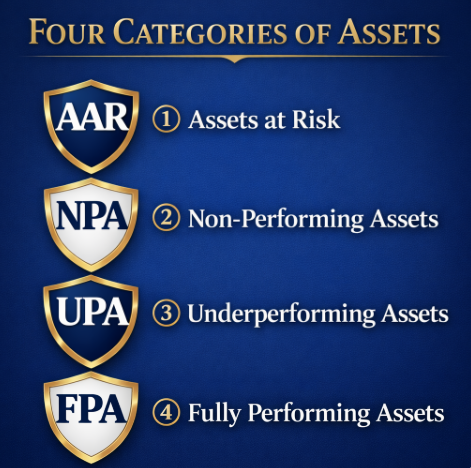
From Assets at Risk (AAR) to Fully Performing Assets (FPA)
To defuse the "Day One Disaster," we have to move away from the "Vegas in a Suit" model. We categorize your money into four distinct buckets to see where you stand:
Non-Performing Assets (NPA): Cash under the mattress or in low-yield checking. It's safe, but inflation is eating it alive.
Underperforming Assets (UPA): Money that’s working, but not hard enough (or with too much drag).
Assets at Risk (AAR): This is where most retirees live. Your lifestyle is dependent on the "Greed/Fear" meter of Wall Street. If the market crashes, your plan crashes.
Fully Performing Assets (FPA): These are "Multi-Pillar" assets.
Think of an FPA like a smartphone. Your old phone was just a phone. Then we got pagers, cameras, and GPS units. Eventually, technology consolidated them into one device. An FPA is the "smartphone" of finance. It consolidates growth, 0% floors (protection from losses), tax-free income, and long-term care benefits into a single, engineered vehicle.
Engineering Your 0% Floor
The most powerful way to protect your retirement savings from a market crash is to install a 0% Floor.
Imagine a year like 2008 or 2022. While the "Participation" crowd is watching their balances drop by 20% or 30%, your account simply stays flat. You don’t lose a dime of your principal or your previous gains.
This isn't magic; it’s Asset Liability Management (ALM). By using institutional-grade banking architecture, we can design a plan where you enjoy Uncapped Gains (UCG) when the market goes up, but you are completely immune to the downside.
When the market recovers, you aren't starting from a hole. You’re starting from the peak. That is how you win the Sequence of Returns game.

The Million Dollar Hour™: Your Engineering Blueprint
Wall Street thrives on hidden complexity. They want you to believe that retirement planning is so complicated you need to check your "dashboard" every day and watch the news for "market signals."
We believe in Clarity over Confusion.
We don't do "free consultations" because we don't offer "free cheese." We offer high-friction, high-clarity financial architecture for people who are tired of the noise.
The Million Dollar Hour™ Forecast is a $995 deep-dive session where we apply a Volatility Recovery Analysis to your specific numbers. We look at your "Sequence of Return Margin" and determine exactly how much a market crash would hurt you on Day One.
In sixty minutes, we help you unlearn the myths of the "Accumulation Era" and learn the rules of the "Distribution Era." We answer the five questions every retiree deserves to have guaranteed:
What is my money worth today (GPV)?
Are my gains protected (SUF)?
Is my growth uncapped (UCG)?
What will my money be worth in the future (GFV)?
Is my income reliable and guaranteed?
Peace is the Path, Wisdom is the Way
The "Day One Disaster" isn't an act of God. It’s an engineering failure. If a bridge collapses because the wind blew too hard, we don’t blame the wind: we blame the architect.
Your retirement shouldn't be a bet on whether the market behaves itself during your first few years of freedom. It should be a designed, mathematical certainty that allows you to sleep through a recession without a care in the world.
Stop participating in a system designed to extract value from you. Start performing in a system designed to protect you.
Your Money, Your Rules, In Your Time, On Your Street.
Ready for clarity instead of confusion?
The Million Dollar Hour™ is your educational, one-on-one retirement review that reveals where your plan leads : not just where it’s been.
👉 Schedule your session today.
Concerned about market losses, taxes, or income reliability?
Take the 7 Question Retirement Stress Test →
You can keep participating… Or you can finally see the outcome. The Million Dollar Hour™ shows you exactly:
✔ Where you are ✔ Where you’re going ✔ How to fix the gaps 👉 Book your session now
Check out the Retirement Blueprint