
Retirement Strategies That Maximize Income, Eliminate Risk, and Help Ensure You Never Run Out of Money How to Achieve The Retirement Future Everyone Seeks
Most retirement plans are built on assumptions that no longer hold up—market averages, predictable tax rates, and the belief that time will always recover losses. But as you approach or enter retirement, the rules change. What worked during your accumulation years can become a liability during the withdrawal phase.
This blog is designed to help you rethink traditional strategies and discover a more engineered approach to retirement income—one focused on certainty, efficiency, and control.
Here, you’ll learn how to reduce or eliminate the biggest threats to your financial future, including market losses, rising taxes, hidden fees, and the silent erosion caused by lost time. We break down complex financial concepts into clear, actionable insights so you can make better decisions about your 401(k), IRA, and retirement income strategy.
You’ll also discover why many conventional approaches—like relying on average returns or the 4% rule—can expose you to unnecessary risk, especially when withdrawals begin. Instead, we explore strategies designed to protect your principal, improve compounding efficiency, and create predictable income streams that last.
Our focus is on helping you transition from “assets at risk” to a more stable and structured approach using fully performing assets—where growth, income, and protection work together instead of against each other.
Whether you’re still working or already retired, the goal is simple:
help you keep more of what you earn, generate more reliable income, and build a plan that doesn’t depend on hope, timing, or market luck.
If you’ve ever wondered:
* How to create tax-efficient retirement income
* How to avoid sequence of returns risk
* How to reduce fees and increase net returns
* How to design income that doesn’t run out
—you’re in the right place.
Explore the articles below and start building a retirement strategy based on engineering, not guesswork.
5 Best Times to Test Retirement
The 5 Best Times to Test Your Retirement
Start here: See what your retirement actually looks like → 👉 Book Your Million Dollar Hour™

By Frank L. Day, invertor of Million Dollar Hour. One of the fastest ways to uncover hidden risk
is to take our 7 Question Retirement Stress Test.
Don’t Let Your Default Choose Your Retirement
1. Disrupt: The Best Time Is Before You Need Answers
Most people test their retirement plan after something breaks.
A market decline. A layoff. A health event. A retirement date that suddenly feels too close.
That is backwards.
The best time to test your future is when life gives you a natural decision point: before urgency takes over. Five moments stand out:
Starting a new job
Living through a bull market
Transitioning out of a job
During a flat market
During a market crash
Each moment creates movement. Each moment also creates noise.
The noise sounds helpful:
> “Just set it and forget it.”
> “See? It works. Stay the course.”
> “You have 60 days to decide.”
But noise is not a plan. Test before the default, the headline, or the deadline makes the decision for you.
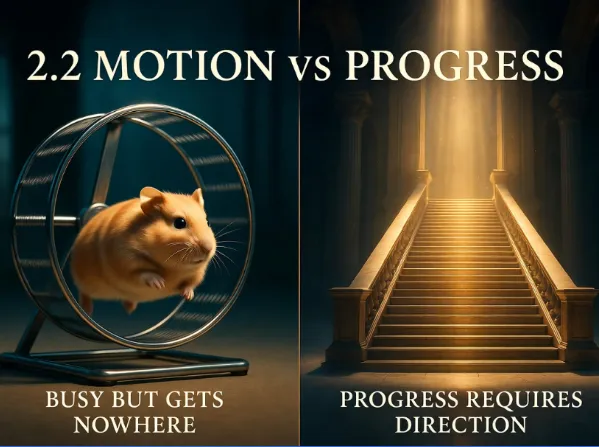
2. Reveal Financial Gravity: Why Motion Does Not Equal Progress
Your retirement plan operates inside the Engineered Retirement Blueprint:
The Balance Sheet is your source of funds.
The Income Statement is your use of funds.
Margin is the battleground between positive and negative outcomes.
Financial gravity pulls against that margin through taxes, fees, inflation, volatility, unnecessary risk, and lost time.
A rising account balance can hide those forces. A default investment can hide them even longer.
Traditional Wall Street planning often presents a Shiny Object: average annual returns of 7%–10%. The Dark Object is the total of all negatives: market retractions, sequence-of-return risk, fees, taxes, and years spent recovering.
The difference matters. A 30% loss requires approximately a 42.9% gain just to return to the starting point. A 40% loss requires a 66.7% gain.
That is The Math of Recovery.
Markets may be useful tools for institutions and the unknown 3% who succeed through a combination of skill and luck. They can become a destructive storm for individuals who participate without a rules-based design.
Participation is not performance.

3. Show the Cost: Every Default Has a Price
The price of inertia rarely appears as a line item.
It appears as:
A contribution rate that never increased
An old 401(k) left behind after a job change
A target-date fund accepted without review
A rollover completed under pressure
A market loss that takes years to recover
Income that depends on an account balance instead of a contract
The Wall Street Cycle, as we use it in retirement stress testing, includes routine 10%–20% swings roughly every 18 months and major retractions averaging about 40% every five to seven years. Across a lifetime, that can mean numerous major setbacks. In our framework, each major retraction may cost at least 3.3 years of lost time.
Money can recover. Time never does.
The 5x Accumulated Loss Truth makes the hidden cost more visible. In a lifetime model, $100,000 of contributions can be associated with $500,000 in cumulative losses across repeated cycles. That is an illustration: not a universal prediction: but it shows why measuring contributions alone is incomplete.
Your real question is not, “What did I contribute?”
Ask:
> “What is the maximum lifetime income my assets can produce while preserving the greatest amount of generational wealth?”
4. Introduce Your Street: Five Moments to Test
Best Time 1: Starting a New Job
Starting a new job creates maximum motion and minimum scrutiny.
You are completing benefits forms, choosing insurance, learning payroll systems, and meeting new people. Somewhere in the middle, a retirement plan asks you to make several important decisions.
The noise says:
> “Just set it and forget it: the target-date fund does it all.”
A target-date fund may offer diversification and an age-based allocation. It may be a reasonable default for some people. But it is not automatically personalized, and it generally does not create a contractual lifetime-income guarantee.
Auto-enrollment can help people begin saving. Research from the National Bureau of Economic Research shows how powerful defaults can be. The same mechanism can also keep people at a low contribution rate or in a fund they never reviewed.
Test these items immediately:
Your contribution rate
Employer-match rules
Investment expenses
Default investment
Beneficiary designations
Old-account rollover options
Whether the plan is designed for accumulation or retirement income
Do not confuse being enrolled with being engineered.
Best Time 2: During a Bull Market
A bull market is the peak of confidence and the trough of questions.
Everything is rising, so everything feels fine. Account statements look encouraging. Retirement may seem closer. The noise says:
> “See? It works. Don’t touch a winning strategy. Stay the course.”
A strong market is precisely when you can test without panic. The decision is unforced.
Use the calm to ask:
How much of this result came from contributions?
How much came from market expansion?
What happens if the next major retraction arrives near retirement?
Can the income plan survive a bad sequence of returns?
Which gains are protected by contract, and which are only projections?
Plan in the calm, not the storm.
The goal is not to predict the next market move. Nobody knows tomorrow. The goal is to understand how much risk your income plan can tolerate before a downturn damages your future choices.
Best Time 3: During a Job Transition
A job transition is a forced reckoning disguised as a ripple.
You may face a rollover decision, a cash-out temptation, new plan options, or an advisor introduction. The noise says:
> “You have 60 days to decide, or we’ll do it for you.”
That statement can create unnecessary pressure. Some distributions do involve a 60-day rollover window, while a direct trustee-to-trustee rollover may help avoid withholding and reduce deadline risk. The details depend on the account and circumstances. Get qualified tax guidance before acting.
Do not let urgency choose your architecture.
Compare the actual options:
Leave the money in the old plan, if permitted
Roll it directly into the new employer plan
Roll it directly into an IRA
Cash out, understanding the taxes, penalties, and lost compounding
Then test each option against income, protection, tax efficiency, fees, and legacy: not convenience alone. The SEC’s investor education guidance on changing jobs is a useful starting point.
Best Time 4: During a Flat Market
A flat market looks calm, but calm is not the same as progress.
When the market produces no growth, the account only moves because contributions keep going in. That is the moment when growth from contributions only can be revealed. The account is not compounding. It is just being fed.
The noise says:
> “Nothing is happening. Leave it alone.”
In reality, a flat market is a stress test. It exposes whether any real returns are being generated or whether the only visible progress comes from new money entering the account.
Test these items:
How much of any gain came from contributions versus genuine market expansion
Whether fees are still being charged during a period of no growth
Whether the strategy produces income or only holds empty motion
Which outcomes are backed by contract and which still depend on assumptions
Do not mistake account activity for engineered performance. Distinguish contractual guarantees from assumptions, especially when the market itself is producing no lift.
Best Time 5: During a Market Crash
A market crash is the most emotional moment and usually the worst time to plan, because fear wants to make the decision for you.
But it is still a critical moment to test, not react.
The noise says:
> “Don’t look at your statement. It’ll come back. Stay the course.”
Do not let emotion hide the evidence. Measure the damage precisely:
What was actually lost
How many years may be required to recover
Whether the crash revealed a plan built on Assets at Risk instead of a protected foundation
Which parts of the plan were assumptions and which parts, if any, were contractual guarantees
This is how you convert a moment of maximum fear into a moment of maximum clarity.
Still, the ideal is to test before a crash. That is why the earlier triggers matter. Calm decisions usually beat emotional decisions. Wisdom plans early. Stewardship tests before the storm.
5. Identity: Are You Participating or Engineering?
The Retirement Personality Framework helps explain why people respond differently.
Orange reacts to urgency and actively trades.
Red assumes more risk is better and leaves everything alone.
Yellow fears mistakes and takes profits too early.
Green keeps learning, reviews the allocation, reduces unnecessary fees, and engineers the outcome.
Choose Green.
A Quiet Builder treats learning as stewardship. You are responsible for understanding what you have been given and preventing avoidable consequences through wisdom.
That does not mean knowing every ticker or predicting every headline. It means asking better questions.
Peace is the path, wisdom is the way.
6. Journey: Use the Five Triggers to Go Deeper
These five moments open the 9 Levels of Retirement Discovery™:
Outcome: What income and legacy do you want?
Cost: What are taxes, fees, inflation, volatility, and lost time costing?
Opportunity: Which assets could become Fully Performing Assets™?
Barrier: Which outdated beliefs keep you passive?
Truth: What is your actual return: not the average projection?
Risk: What losses could permanently damage your margin?
Principle: Are you protecting principal and avoiding unnecessary loss?
Value: What is your money’s lifetime usefulness and present value?
Synergy: Do all parts of the plan work together?
This is the Complete Wealth Engineering Journey™: continuously learning, unlearning, testing, and improving.
Retirement planning is evolving. A traditional Wall Street or bank strategy can be thought of as a Rolodex in a SpaceX world: durable in its era, but not built for the speed, complexity, and technical demands of modern retirement.
7. Difference: Build Margin, Not Just a Portfolio
The 7 Disciplines of Retirement Wealth™ provide the “why.” This article serves:
Discipline 2 : Protect Against Unnecessary Loss
Discipline 3 : Protect Forward Progress
Discipline 4 : Protect Time
Discipline 6 : Upgrade Your Thinking
The FPA Pillars provide the “what.” Traditional banks, stocks, and real estate are often single-pillar assets. Fully Performing Assets can combine five to fifteen pillars, such as growth, protection, long-term-care benefits, tax-advantaged income, and legacy planning.
Some FPA designs may include Uncapped Gains (UCG) and Expanded Market Participation (EMP). EMP may apply a 110%–200% multiplier to UCG: for example, a 10% indexed gain could become an 11%–20% credited gain, subject to contract terms, caps, participation rates, spreads, charges, and insurer guarantees.
That is why you must distinguish contractual guarantees from assumptions and projections. Guarantees depend on the claims-paying ability of the issuing institution and the actual contract.
Your Street Wealth calls this Participation vs. Engineered Performance:
Certainty vs. uncertainty
Guarantees vs. probabilities
Control vs. dependence
Growth without loss vs. growth with loss
Increasing income vs. depleting assets
Time compounding vs. time lost

8. Self-Diagnosis: Find Your Default Trap
Audit your plan at the next trigger.
At a new job
Ask:
Did I choose this contribution rate?
Did I choose this fund?
Does the plan create income, or only accumulation?
What fees provide value: and which are simply a toll with no bridge?
During a bull market
Ask:
Am I mistaking rising prices for retirement readiness?
What would a 30%–40% retraction do to my income?
How many years could I lose recovering?
Which assumptions can disappear?
During a job transition
Ask:
Am I making a decision or accepting the easiest option?
Is this a direct rollover?
Have I compared old plan, new plan, and IRA costs and protections?
What happens to my Balance Sheet, Income Statement, and Margin?
During a flat market
Ask:
Is the account growing from compounding or from contributions only?
How much of the visible gain came from new money rather than genuine market expansion?
Are fees still being charged while growth is flat?
Does this strategy produce income or only empty motion?
During a market crash
Ask:
What was actually lost?
How many years may be required to recover?
Did this reveal Assets at Risk instead of a protected foundation?
Which outcomes were assumptions and which were backed by contract?
Run the plan through OOM™: Odds, Opinions, and Models. Stress-test the assumptions. Do not build your future on a calculator that cannot control losses, fees, taxes, or sequence risk.
9. Hope: You Can Still Interrupt the Pattern
A default is not destiny.
You can test your plan while the market is calm. You can increase efficiency without simply increasing risk. You can identify Assets at Risk (AAR): hidden liabilities created when lost money and lost time produce negative margin.
You can compare single-pillar assets with multi-pillar designs. You can examine whether a safety-first strategy may better support income and legacy. You can preserve today’s victories rather than repeatedly placing them back into the Wall Street Cycle.
That is the purpose of the Your Street Wealth Million Dollar Hour™ Forecast: not to predict tomorrow, but to test the consequences of different rules today.
Your Money, Your Rules, In Your Time, On Your Street.
10. CTA: Test Before the Noise Gets Loud
Schedule the paid $995 Million Dollar Hour™ Engineering/Margin Audit if you are ready for a scrutinized, personalized review: not another generic projection.
In one focused session, the Income Analysis Comparison can show:
Your current income capacity
The impact of market retractions
Your Sequence of Return Margin
Your Volatility Recovery Analysis
Your Compounding Efficiency
Your projected lifetime income
Your potential legacy
The difference between your current path and an engineered alternative
Before the final decision, read Why You Should Test Your Retirement Plan Early.
Then test your future at the next natural trigger: or test it now, before the next trigger arrives.
Ready for clarity instead of confusion?
The Million Dollar Hour™ is your educational, one-on-one retirement review that reveals where your plan leads : not just where it’s been.
👉 Schedule your session today.

Discover Which Wealth Killers Are Affecting You
Most people are impacted by 6–9 and don’t realize it
Wealth Killer #1: The Granddaddy : Why Market Volatility is Your Retirement’s Greatest Enemy
Concerned about market losses, taxes, or income reliability?
Take the 7 Question Retirement Stress Test →
You can keep participating… Or you can finally see the outcome. The Million Dollar Hour™ shows you exactly:
✔ Where you are ✔ Where you’re going ✔ How to fix the gaps 👉 Book your session now