
Retirement Strategies That Maximize Income, Eliminate Risk, and Help Ensure You Never Run Out of Money How to Achieve The Retirement Future Everyone Seeks
Most retirement plans are built on assumptions that no longer hold up—market averages, predictable tax rates, and the belief that time will always recover losses. But as you approach or enter retirement, the rules change. What worked during your accumulation years can become a liability during the withdrawal phase.
This blog is designed to help you rethink traditional strategies and discover a more engineered approach to retirement income—one focused on certainty, efficiency, and control.
Here, you’ll learn how to reduce or eliminate the biggest threats to your financial future, including market losses, rising taxes, hidden fees, and the silent erosion caused by lost time. We break down complex financial concepts into clear, actionable insights so you can make better decisions about your 401(k), IRA, and retirement income strategy.
You’ll also discover why many conventional approaches—like relying on average returns or the 4% rule—can expose you to unnecessary risk, especially when withdrawals begin. Instead, we explore strategies designed to protect your principal, improve compounding efficiency, and create predictable income streams that last.
Our focus is on helping you transition from “assets at risk” to a more stable and structured approach using fully performing assets—where growth, income, and protection work together instead of against each other.
Whether you’re still working or already retired, the goal is simple:
help you keep more of what you earn, generate more reliable income, and build a plan that doesn’t depend on hope, timing, or market luck.
If you’ve ever wondered:
* How to create tax-efficient retirement income
* How to avoid sequence of returns risk
* How to reduce fees and increase net returns
* How to design income that doesn’t run out
—you’re in the right place.
Explore the articles below and start building a retirement strategy based on engineering, not guesswork.
How to Create Retirement Income for Life
Income Without Degradation: The Only Way to Buy Time
Start here: See what your retirement actually looks like → 👉 Book Your Million Dollar Hour™

By Frank L. Day, invertor of Million Dollar Hour. One of the fastest ways to uncover hidden risk
is to take our 7 Question Retirement Stress Test.
Your Retirement Income Should Not Spend Your Future
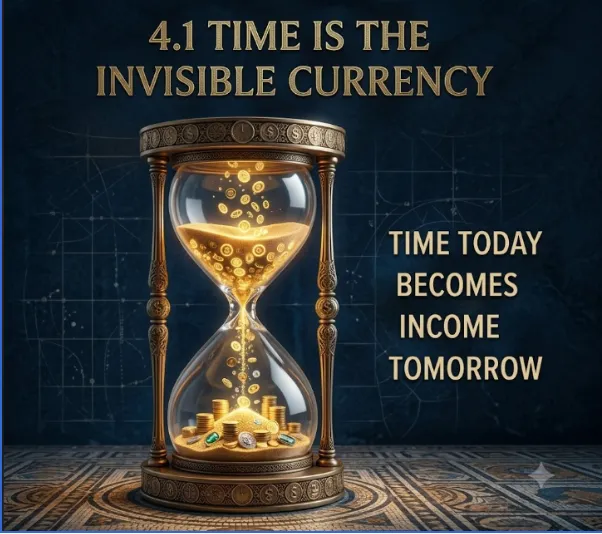
Time is the only non-renewable resource.
Money can be earned again. Markets can recover. Property can be sold. A business can be rebuilt.
But yesterday cannot be repurchased.
That makes retirement more than an investment problem. It is a time-conversion problem:
> How can your wealth produce income for life and beyond without degrading the engine that produces it?
That is the foundation of Participation vs. Engineered Performance.
1. Disrupt: Income That Depletes Is a Countdown
Many retirement plans call withdrawals “income.”
But if every payment reduces the asset that must fund future payments, you are not simply receiving income. You are spending the engine.
That may be appropriate for some assets and some goals. But it must be recognized honestly.
A portfolio that produces $60,000 this year by selling units after a market decline may be buying today’s time with tomorrow’s income. If the account must keep selling, the strategy eventually becomes a countdown.
Income without degradation means designing a source of funds that can continue producing contractual income while preserving future usefulness and legacy potential.
For life means you do not outlive the income stream.
And beyond means your family is not forced to sell the remains of your working years after you are gone.
Money cannot buy time directly. But wealth that produces dependable income without unnecessary depletion can buy the freedom that time represents.
2. Reveal Financial Gravity: See What Pulls Your Plan Down
Retirement plans are affected by financial gravity: the forces that quietly pull down income, wealth, and time.
These forces include:
Market losses
Taxes
Fees
Inflation
Poor income design
Sequence-of-returns risk
Interrupted compounding
Delayed decisions

The Wall Street Cycle is part of this gravity. Routine 10%–20% market swings can occur roughly every 18 months, while major retractions averaging about 40% may arrive every five to seven years.
Each major retraction can cost at least 3.3 years of lost time in recovery and interrupted compounding.
That is not just a temporary account-value problem. It is a future-income problem.
Apply Discipline 4 , Protect Time:
> How much future income is lost when time is lost?
Then apply Discipline 1 , Protect the Principal:
> Is your retirement plan designed to preserve your wealth engine?
3. Show the Cost: Understand the Math of Recovery
A 30% loss requires a 42.9% gain to recover.
$100,000 falls to $70,000.
$70,000 must gain approximately $30,000.
That requires a 42.9% increase just to return to $100,000.
That is The Math of Recovery.
Now look at the Shiny Object versus the Dark Object.
The Shiny Object is the familiar 7%–10% average annual return story.
The Dark Object is the total of what the average may hide:
Cumulative cycle losses
Recovery years
Fees
Taxes
Inflation
Sequence risk
Lost income
Compounding inefficiency
The 5x Accumulated Loss Truth shows why this matters. A person may contribute $100,000 over a lifetime while experiencing $500,000 in cumulative losses, missed gains, fees, and recovery demands.
The exact number differs by person. The stewardship issue does not.
If you do not measure what is being lost, you cannot responsibly maximize what has been given to you.
4. Introduce Your Street: Exit the Degradation Model
The Your Street standard is:
> Preserve, Protect & Prolong : without leaks, drains, or unnecessary losses.
Use the Engineered Retirement Blueprint:
The Balance Sheet is the source of funds.
The Income Statement is the use of funds.
Margin is the battleground between positive and negative outcomes.
Traditional banks, stocks, and real estate are generally single-pillar assets. Each can have a role, but each typically performs a limited job while leaving you to coordinate protection, growth, income, taxes, and legacy separately.
That is a Rolodex in a SpaceX world.
Modern retirement requires a consolidation of technology. Phones, pagers, cameras, calendars, and televisions once served separate purposes. The smartphone combined them into one coordinated system.
Fully Performing Assets™ are designed as the multi-pillar “smartphone” of finance. Depending on the contract, they may combine five to fifteen pillars, such as:
Growth
Protection
Lifetime income
Liquidity
Long-term-care support
Tax-aware income
Legacy
Uncapped Gains™
Expanded Market Participation™
A 0% floor can protect credited value from direct market losses, subject to contract terms. EMP may apply a 110%–200% multiplier to UCG. For example, a 10% UCG opportunity could become an 11%–20% gain, depending on the actual contract and crediting method.
Test every guarantee. Read the contract. Distinguish contractual values from illustrations and assumptions.
5. Identity: Choose Architecture Over Participation
Your retirement personality influences your outcome.
Orange actively trades, reacts to headlines, and pays fees for motion.
Red leaves everything alone and ignores drawdowns and sequence risk.
Yellow takes profits too early, hoards cash, and weakens compounding.
Green keeps learning, becomes allocation-aware, and engineers the outcome.
Choose Green.
Continuous learning is not an optional upgrade for a Quiet Builder. It is stewardship. You are responsible for unlearning myths, questioning assumptions, and preventing avoidable consequences through wisdom.
The market is a tool engineered primarily for institutions and the unknown 3% who succeed through a mixture of skill and luck. Without rules, individual participation can become a destructive storm.
High greed on the Greed/Fear meter usually signals higher risk of loss. High fear often signals lower risk of loss. Do not confuse emotional intensity with financial opportunity.
6. Journey: Move From Degradation to Performance
Complete Wealth Engineering™ begins with three actions:
Understand
Identify what creates income, what creates losses, and what values are contractual.
Use OOM™ : Odds, Opinions, Models : to stress-test every projection.
Uproot
Remove unnecessary leaks.
Question fees that do not eliminate market losses, lost time, sequence risk, or compounding inefficiency. A fee that provides no bridge across risk is a toll with no bridge.
Undergird
Build a stronger foundation with protection, efficient compounding, and income design.
This is the purpose of FPA and the FIAAR Strategy: coordinate assets around the primary question:
> What is the maximum lifetime income your assets can produce while preserving the greatest amount of generational wealth?
7. Difference: Apply the Seven Disciplines
The 7 Disciplines of Retirement Wealth™ explain why the architecture matters:
Protect the Principal.
Protect Against Unnecessary Loss.
Protect Forward Progress.
Protect Time.
Increase Efficiency, Not Risk.
Upgrade Your Thinking.
Preserve Every Victory.
This article most directly serves Discipline 1, Discipline 4, and Discipline 7.
Do not treat gains as permanent until they are protected.
A retirement plan should not merely show what your assets might become. It should show how those assets can remain useful, produce income, and support your family beyond your lifetime.
8. Self-Diagnosis: Run the Margin Audit™
Run The Margin Audit™ across the 9 Levels of Retirement Discovery™:
Outcome: What income and legacy do you want?
Cost: What are taxes, fees, inflation, volatility, and delay costing?
Opportunity: Which guarantees and FPA pillars are missing?
Barrier: Which outdated beliefs restrict your choices?
Truth: What is your actual compounded return?
Risk: Which losses can permanently destroy wealth?
Principle: Is principal protected before income is distributed?
Value: What is the lifetime usefulness and present value of your money?
Synergy: Do all parts of the plan work together?
Classify your assets:
NPA: Non-Performing Assets, often reserved for emergencies or immediate needs.
AAR: Assets at Risk, where lost money and lost time create negative margin.
UPA: Underperforming Assets, producing less than their available potential.
FPA: Fully Performing Assets, designed to coordinate multiple pillars of value.
Then complete a Volatility Recovery Analysis, measure Compounding Efficiency, and calculate your Sequence of Return Margin.
A plan must be testable to be valid. A plan that cannot be tested is merely a promise.
9. Hope: Buy Time With Rules, Not Wishes
Hope becomes useful when it follows evidence.
Compare the two paths:
Uncertainty vs. certainty
Probabilities vs. guarantees
Dependence vs. control
Growth with loss vs. growth without unnecessary loss
Depleting assets vs. increasing income
Time lost vs. time compounding
The goal is not to eliminate every financial risk. The goal is to identify which risks you can avoid, which guarantees you can contractually secure, and which assets should remain available for future income and legacy.
That is the difference between a false architecture built on participation and a designed architecture built on performance.
Peace is the path, wisdom is the way.
Before you make another retirement decision, read Make Your Rules: The Time Ledger of Retirement. Protect your time by making the rules visible.
10. CTA: Test Whether Your Income Degrades
The Million Dollar Hour™ Forecast is a paid, one-on-one educational retirement review for serious Quiet Builders.
For $995, the session examines whether your current income strategy comes with degradation attached. It may include:
The Margin Audit™
Volatility Recovery Analysis
Compounding Efficiency review
Sequence of Return Margin analysis
Current-income and future-income comparison
Lost-time calculation
Risk and legacy review
Personalized action priorities
Permanent tuition for the Retirement Reliability Academy
For an average-sized qualifying account, the review can provide at least $20,000 in immediate value, representing a potential 20:1 benefit-to-cost ratio. Actual value depends on your accounts, contracts, objectives, and circumstances.
Do not ask whether your plan sounds reasonable.
Ask whether it can produce income for life and beyond.
Ask whether the engine remains intact.
Ask whether the guarantees are contractual.
Ask whether the result preserves, protects, and prolongs your time.
Your Money, Your Rules, In Your Time, On Your Street.
Some Money, Same Time. Different Rules. On Your Street. Different Outcomes.
Ready for clarity instead of confusion?
The Million Dollar Hour™ is your educational, one-on-one retirement review that reveals where your plan leads : not just where it’s been.
👉 Schedule your session today.

Discover Which Wealth Killers Are Affecting You
Most people are impacted by 6–9 and don’t realize it
Wealth Killer #1: The Granddaddy : Why Market Volatility is Your Retirement’s Greatest Enemy
Concerned about market losses, taxes, or income reliability?
Take the 7 Question Retirement Stress Test →
You can keep participating… Or you can finally see the outcome. The Million Dollar Hour™ shows you exactly:
✔ Where you are ✔ Where you’re going ✔ How to fix the gaps 👉 Book your session now