
Retirement Strategies That Maximize Income, Eliminate Risk, and Help Ensure You Never Run Out of Money How to Achieve The Retirement Future Everyone Seeks
Most retirement plans are built on assumptions that no longer hold up—market averages, predictable tax rates, and the belief that time will always recover losses. But as you approach or enter retirement, the rules change. What worked during your accumulation years can become a liability during the withdrawal phase.
This blog is designed to help you rethink traditional strategies and discover a more engineered approach to retirement income—one focused on certainty, efficiency, and control.
Here, you’ll learn how to reduce or eliminate the biggest threats to your financial future, including market losses, rising taxes, hidden fees, and the silent erosion caused by lost time. We break down complex financial concepts into clear, actionable insights so you can make better decisions about your 401(k), IRA, and retirement income strategy.
You’ll also discover why many conventional approaches—like relying on average returns or the 4% rule—can expose you to unnecessary risk, especially when withdrawals begin. Instead, we explore strategies designed to protect your principal, improve compounding efficiency, and create predictable income streams that last.
Our focus is on helping you transition from “assets at risk” to a more stable and structured approach using fully performing assets—where growth, income, and protection work together instead of against each other.
Whether you’re still working or already retired, the goal is simple:
help you keep more of what you earn, generate more reliable income, and build a plan that doesn’t depend on hope, timing, or market luck.
If you’ve ever wondered:
* How to create tax-efficient retirement income
* How to avoid sequence of returns risk
* How to reduce fees and increase net returns
* How to design income that doesn’t run out
—you’re in the right place.
Explore the articles below and start building a retirement strategy based on engineering, not guesswork.

Massive Nest Egg Truth of Retirement Income Planning
Do You Really Need a Massive Nest Egg? The Truth About Retirement Income Planning
One of the fastest ways to uncover hidden risk is to take our 7 Question Retirement Stress Test.

Start here: See what your retirement actually looks like → 👉 Book Your Million Dollar Hour™
For decades, Wall Street has sold us a "Magic Number." You’ve heard it in every coffee shop and corporate breakroom: “I need $2 million to retire,” or “If I can just hit the $5 million mark, I’m safe.”
But here is the quiet truth that the big brokerage firms don't want to discuss: The size of the pile doesn’t matter if the plumbing is leaky.
If you are a "Quiet Builder": someone who has worked hard, saved diligently, and now finds yourself nearing the finish line: you might be feeling a strange sense of unease. You have the "Big Number," yet you don't feel the "Big Peace."
That’s because Wall Street has trained you to focus on Participation (gambling on market direction) rather than Engineered Performance (designing a guaranteed outcome).
In this guide, we’re going to unlearn the myths of the "massive nest egg" and look at the mathematical architecture required for a truly Fully Performing Retirement.
The Illusion of "The Pile" vs. The Reality of "The Flow"
Traditional retirement planning is obsessed with the accumulation phase. They want you to build the biggest possible pile of money because they get paid a percentage of that pile. They call this "Participation."
The problem? You can’t eat a pile. You can only eat the income flow that the pile generates.
Think of it like this: A 1,000-gallon water tank sounds great until you realize it’s sitting in the middle of a desert with a massive hole in the bottom. If you’re losing 100 gallons a day to evaporation (taxes), 50 to leaks (fees), and another 200 to "market volatility," that big tank isn't going to last very long.
At Your Street Wealth, we focus on the efficiency of the flow. We shift the focus from How much do I need to retire? to How much spendable, guaranteed income can I engineer?
The Three Wealth Killers Stealing Your Time
When your retirement plan is based on market participation, you are at the mercy of three primary "Wealth Killers." These are the silent forces that erode a massive nest egg, making a $3 million portfolio perform like a $1.5 million one.
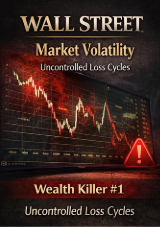
1. The Math of Recovery (Volatility)
Wall Street loves to talk about "average returns." But you don't live on averages; you live on actual dollars. This is where the Volatility Recovery Analysis becomes vital.
Consider this: If your portfolio takes a 30% hit in a market downturn, you don't just need a 30% gain to get back to even. You need a 42% gain just to return to your starting point. While your money is "recovering," your time is not. You have effectively reset the clock on your compounding.
2. Hidden Fees and "Participation" Costs
Traditional assets like stocks and mutual funds are often "single-pillar" assets. They provide one thing: potential growth. In exchange, they charge fees that extract value whether you win or lose. We call this a "Rolodex in a SpaceX world": it’s an outdated model that ignores the speed and risk of modern markets.

3. The Tax Trap
A massive nest egg in a traditional 401(k) or IRA is a joint account with the IRS. You own the balance, but they own the lien. If tax rates rise in the future, your "massive pile" shrinks instantly.
And the real problem shows up when you enter the distribution phase. That’s when the traditional Wall Street model begins to suffer a structural progressive collapse or cascading failure. Why? Because the system is now carrying multiple loads at once: routine market losses, taxes, fees, and income withdrawals. That combination creates stress the traditional 401(k)/IRA architecture simply wasn’t designed to support.
This is the difference between Participation vs. Engineered Performance. Participation hopes the structure holds. Engineered Performance designs the structure to carry the load from day one.
Single-Pillar vs. Multi-Pillar: The Smartphone Analogy
Remember when you had a separate camera, a pager, a map, and a heavy brick of a cell phone? Those were "single-pillar" tools. Today, you have a smartphone: one device that consolidates 15 different tools into one high-performance machine.
Most retirement portfolios are still in the "pager and map" era. They use:
Banks (Non-Performing Assets - Infants)
Stocks (Assets at Risk - Teens)
Real Estate (Uncontrolled Performing Assets)
These are single-pillar assets. They are high-risk, high-fee, or high-tax.
Contrast this with Fully Performing Assets (FPA). An FPA is the "smartphone" of finance. It’s an engineered vehicle that can provide 5 to 15 "pillars" of value simultaneously, including:
Guaranteed Growth (Contractual, not projected)
0% Floors (No market losses, ever)
Tax-Free Income
Uncapped Gains (UCG) and Expanded Market Participation (EMP)
When you use FPA, you don't need a $5 million nest egg to generate $200,000 in income. Because the asset is more efficient, a smaller, engineered foundation can often outperform a much larger, exposed pile.

Audit the Margin: Why Precision Beats Prediction
Wall Street operates on a "False Model" driven by the Greed/Fear meter. When greed is high, they push you into more risk. When fear is high, they tell you to "hold on."
We prefer Institutional-grade Engineering.
Instead of guessing what the S&P 500 will do next year, we perform a Margin Audit™. We look at your Compounding Efficiency and your Sequence of Return Margin.
We ask the hard questions:
Is your income designed or dependent?
Are you using Level Yield Amortization to heal your balance sheet?
Do you have a Stepped UP Floor (SUF) to lock in your gains?
If you are still spinning "sharp knives" (interest-rate ripples and market volatility), you aren't planning; you’re participating in someone else’s game.
The Path to Certainty
"Peace is the path, wisdom is the way."
For the Quiet Builder, retirement isn't about hitting a jackpot; it's about engineering certainty. It's about knowing that no matter what happens on Wall Street, your life on Your Street remains unchanged.
You can continue to chase the "Magic Number," hoping the market cooperates and the "Wealth Killers" don't find you. Or, you can choose to unlearn the myths and embrace financial architecture. Guaranteed to show you how to Increase your account value by $20,000 - $100,000 immediately.
It’s time to move from Participation to Engineered Performance. It’s time for Your Money, Your Rules, In Your Time, On Your Street.
The first step isn't a 50-page "projection" that will be wrong by next Tuesday. The first step is a scrutinized, mathematical review of where you actually stand.
Ready for clarity instead of confusion?
The Million Dollar Hour™ is your educational, one-on-one retirement review that reveals where your plan leads : not just where it’s been.
👉 Schedule your session today.
Discover Which Wealth Killers Are Affecting You
Most people are impacted by 6–9 and don’t realize it
Wealth Killer #1: The Granddaddy : Why Market Volatility is Your Retirement’s Greatest Enemy
Concerned about market losses, taxes, or income reliability?
Take the 7 Question Retirement Stress Test →
You can keep participating… Or you can finally see the outcome. The Million Dollar Hour™ shows you exactly:
✔ Where you are ✔ Where you’re going ✔ How to fix the gaps 👉 Book your session now
Check out the Retirement Blueprint
The Orange Zone (Ages 45–65): — The "Great Unknown" where market retracements keep you in the dark.
Wealth Killer #2: The 4% Rule Myth : Why 'Safe' Withdrawal Rates Are Dangerous
Concerned about market losses, taxes, or income reliability?
Take the 7 Question Retirement Stress Test →