
Retirement Strategies That Maximize Income, Eliminate Risk, and Help Ensure You Never Run Out of Money How to Achieve The Retirement Future Everyone Seeks
Most retirement plans are built on assumptions that no longer hold up—market averages, predictable tax rates, and the belief that time will always recover losses. But as you approach or enter retirement, the rules change. What worked during your accumulation years can become a liability during the withdrawal phase.
This blog is designed to help you rethink traditional strategies and discover a more engineered approach to retirement income—one focused on certainty, efficiency, and control.
Here, you’ll learn how to reduce or eliminate the biggest threats to your financial future, including market losses, rising taxes, hidden fees, and the silent erosion caused by lost time. We break down complex financial concepts into clear, actionable insights so you can make better decisions about your 401(k), IRA, and retirement income strategy.
You’ll also discover why many conventional approaches—like relying on average returns or the 4% rule—can expose you to unnecessary risk, especially when withdrawals begin. Instead, we explore strategies designed to protect your principal, improve compounding efficiency, and create predictable income streams that last.
Our focus is on helping you transition from “assets at risk” to a more stable and structured approach using fully performing assets—where growth, income, and protection work together instead of against each other.
Whether you’re still working or already retired, the goal is simple:
help you keep more of what you earn, generate more reliable income, and build a plan that doesn’t depend on hope, timing, or market luck.
If you’ve ever wondered:
* How to create tax-efficient retirement income
* How to avoid sequence of returns risk
* How to reduce fees and increase net returns
* How to design income that doesn’t run out
—you’re in the right place.
Explore the articles below and start building a retirement strategy based on engineering, not guesswork.

Protect Retirement Savings from Market Crash: Tulip Trap Audit
The Tulip Trap: Where Does Your Money Go When the Market Crashes?
One of the fastest ways to uncover hidden risk is to take our 7 Question Retirement Stress Test.
![[HERO] The Tulip Trap: Where Does Your Money Go When the Market Crashes?](https://cdn.marblism.com/ezjMqlarLfr.webp "[HERO] The Tulip Trap: Where Does Your Money Go When the Market Crashes?")
Start here: See what your retirement actually looks like → 👉 Book Your Million Dollar Hour™
The Tulip Trap: Where Does Your Money Go When the Market Crashes?
In the 1630s, a single tulip bulb in the Netherlands could cost more than a grand mansion in Amsterdam. People weren’t buying flowers because they loved gardening; they were buying the "more money" dream. They were chasing a ghost.
Fast forward to today, and the scenery has changed, but the script remains the same. Whether it’s tech stocks in 2001, real estate in 2008, or the latest "can’t miss" sector, the "Tulip Trap" is always set.
If you are a Quiet Builder: someone who has worked hard, saved well, and is now looking at a retirement horizon: you need to understand the mechanics of this trap. Because when the market crashes, your money doesn’t just evaporate into thin air. It goes somewhere. And if it’s not staying on Your Street, it’s being pocketed by someone else.
The Emotional Engineering of Wall Street
Most people believe the market is a masterpiece of financial engineering. It’s not. It’s a masterpiece of emotional engineering. Wall Street is designed to evoke two primary emotions: FOMO (Fear Of Missing Out) and FOLO (Fear Of Losing Out).
When the market is screaming toward a peak, FOMO kicks in. You see the green lines, you hear the "irrational exuberance," and it feels silly not to invest. You jump in at the top because you don't want to be the only one left behind.
But then, the gravity of the past catches up. The market must balance itself. When the price overreaches, it eventually snaps back. That’s when the "Fugazi" is revealed. As Matthew McConaughey’s character famously said in The Wolf of Wall Street, it’s a "fugazi, it's a whazy, it's a woozie. It's fairy dust." It doesn’t exist until you take it out.
If you can’t spend it, and you can’t touch it, how do you deposit it? You can’t. Until those gains are engineered and locked in, they are just an apparition.
The Mystery: Where Does the Money Go?
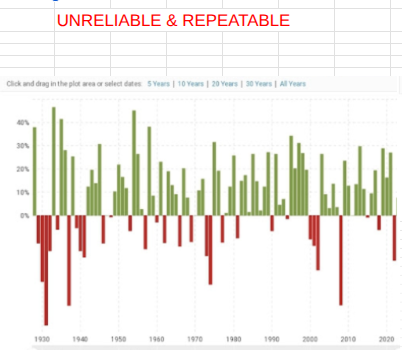
This is the hard-nosed question most investors never ask: When the market drops 30%, where did that money go?
It didn't disappear. It changed hands.
Wall Street is a zero-sum game. Every time you buy a share at the peak, someone else is selling it to you. That person: likely a high-frequency trader or an institutional "gorilla": just took your tactile, non-fungible cash and gave you a digital promise in return. When the "bottom falls out," they still have your cash. You have a "fugazi" that is now worth 30% less.
The market rewards those who sell at the peaks and buy before the masses. If you aren't the one selling at the top, you are the one providing the "exit liquidity." You are competing with a 5,000-pound gorilla in a wrestling match you didn't ask for. If you can’t buy and sell with the speed and insider strength of New York, don't play their game.
Frank’s 2001 Lesson: The Peak is the Most Dangerous Place
Frank L Day, our founder, lived this reality in 2001. Just like everyone else, he didn't care where the money was invested, as long as the ride continued upward. It seemed silly not to be in.
Then came the crash.
The lesson was simple but brutal: You didn't get into the market for the "ups and downs" to balance themselves out to your zero benefit. You got in to grow your future. But when you participate in a "False Model" driven by greed and fear, you are at the mercy of a ride that goes where it wants, when it wants, without asking your permission.
The Math of Recovery: Why "Stay the Course" is a Lie
Your broker will tell you to "stay the course." They want you to remain in the market because they profit from your participation, regardless of your performance. They get paid while you pray for a rebound.
But let’s look at the Volatility Recovery Analysis. If your account loses 30%, you don’t need a 30% gain to get back to even. You need a 42.8% gain just to return to the starting line.
Money can recover. Time never does.
Every year you spend "getting back to even" is a year of compounding efficiency you have lost forever. This is the Sequence of Returns Risk. If you hit a Tulip Trap right as you enter retirement, your plan doesn't just "dip": it breaks. You start drawing down on a shrinking pool of assets, accelerating the depletion.

From Participation to Engineered Performance
Traditional retirement strategies are like using a Rolodex in a SpaceX world. They might have been durable in the 1980s, but they are inadequate for the volatility of 2026.
Most people have "Single Pillar" assets. Stocks, real estate, or traditional bank accounts. These are single-use tools. If the market drops, the stock pillar crumbles. If interest rates spike, the real estate pillar shakes.
We advocate for Fully Performing Assets (FPA). Think of FPA as the "smartphone" of finance. Just as your phone consolidated your camera, pager, map, and phone into one device, an FPA consolidates 5–15 pillars of value into one vehicle.
An FPA offers:
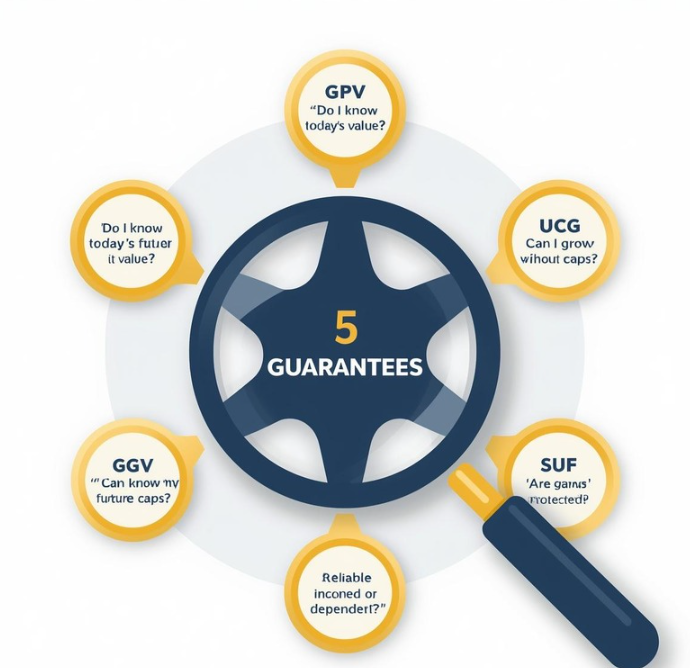
Uncapped Gains (UCG): You participate in the market's growth.
Protection of Gains: Once you make it, you keep it. No "routine retractions."
Guaranteed Growth: A contractual floor of 0%. You never lose a dime to market volatility.
Expanded Market Participation (EMP): Often a 110%–200% multiplier on your gains.
This isn't "hoping" for a result. This is Engineered Performance. You move your pension off Wall Street and put it on Your Street.
Audit the Margin
Wisdom is actionable. If you are feeling financially fatigued by the roller coaster, it’s time for a Margin Audit™.
You need to ask hard-nosed questions for a hard-nosed allocation:
Do I know exactly how I am going to get my money out before I put it in?
Is my current plan based on "probabilities" (Wall Street) or "guarantees" (Your Street)?
Am I wrestling a 5,000-pound gorilla, or am I the architect of my own outcome?
The "global warming" of the market: the rising sea levels of risk and the ice melt of your purchasing power: can’t be ignored. You cannot predict future portfolio value when losses and leaks (fees/taxes) are uncontrollable. But you can engineer a path that is certain.
Peace is the Path, Wisdom is the Way
The Tulip Trap only works on those who prioritize "more money" over "engineered certainty." When you stop "participating" in Wall Street's noise and start "performing" through architectural design, the fear of the next crash disappears.
You take your profits daily, weekly, and monthly. You secure them before the market takes them back. You play by your rules, in your time, on your street.
Stop being the exit liquidity for King Kong. It's time to unlearn the myths and start building on a foundation that doesn't melt when the sun comes out.
Ready for clarity instead of confusion?
The Million Dollar Hour™ is your educational, one-on-one retirement review that reveals where your plan leads : not just where it’s been.
👉 Schedule your session today.
Discover Which Wealth Killers Are Affecting You
Most people are impacted by 6–9 and don’t realize it
Wealth Killer #1: The Granddaddy : Why Market Volatility is Your Retirement’s Greatest Enemy
Concerned about market losses, taxes, or income reliability?
Take the 7 Question Retirement Stress Test →
You can keep participating… Or you can finally see the outcome. The Million Dollar Hour™ shows you exactly:
✔ Where you are ✔ Where you’re going ✔ How to fix the gaps 👉 Book your session now
Check out the Retirement Blueprint