
Retirement Strategies That Maximize Income, Eliminate Risk, and Help Ensure You Never Run Out of Money How to Achieve The Retirement Future Everyone Seeks
Most retirement plans are built on assumptions that no longer hold up—market averages, predictable tax rates, and the belief that time will always recover losses. But as you approach or enter retirement, the rules change. What worked during your accumulation years can become a liability during the withdrawal phase.
This blog is designed to help you rethink traditional strategies and discover a more engineered approach to retirement income—one focused on certainty, efficiency, and control.
Here, you’ll learn how to reduce or eliminate the biggest threats to your financial future, including market losses, rising taxes, hidden fees, and the silent erosion caused by lost time. We break down complex financial concepts into clear, actionable insights so you can make better decisions about your 401(k), IRA, and retirement income strategy.
You’ll also discover why many conventional approaches—like relying on average returns or the 4% rule—can expose you to unnecessary risk, especially when withdrawals begin. Instead, we explore strategies designed to protect your principal, improve compounding efficiency, and create predictable income streams that last.
Our focus is on helping you transition from “assets at risk” to a more stable and structured approach using fully performing assets—where growth, income, and protection work together instead of against each other.
Whether you’re still working or already retired, the goal is simple:
help you keep more of what you earn, generate more reliable income, and build a plan that doesn’t depend on hope, timing, or market luck.
If you’ve ever wondered:
* How to create tax-efficient retirement income
* How to avoid sequence of returns risk
* How to reduce fees and increase net returns
* How to design income that doesn’t run out
—you’re in the right place.
Explore the articles below and start building a retirement strategy based on engineering, not guesswork.

The Boil-over Trap: Protect Retirement Savings from a Crash
The Boil-over Trap: Why the Peter Pan Rule is Killing Your Retirement
One of the fastest ways to uncover hidden risk is to take our 7 Question Retirement Stress Test.
![[HERO] The Boil-over Trap: Why the Peter Pan Rule is Killing Your Retirement](https://cdn.marblism.com/3CBip0ky8hg.webp "[HERO] The Boil-over Trap: Why the Peter Pan Rule is Killing Your Retirement")
Start here: See what your retirement actually looks like → 👉 Book Your Million Dollar Hour™
SpaceX, Steam, and the 1,000-Year Lie: Avoiding the Retirement Boil-over
Down here at Boca Chica, just a stone's throw from the SpaceX launch pads, you learn a lot about pressure. If you watch a Starship sitting on the pad, you’ll see those beautiful, ghostly plumes of white vapor venting off the sides.
In the engineering world, that’s called “Boil-off.” It’s the passive loss of cryogenic fuel as it warms up under the Texas sun. It’s expected. It’s calculated. It’s a slow leak that the engineers account for in their flight math.
But then there’s the “Boil-over.”
A boil-over isn't a passive leak; it’s an active disaster. It happens when internal pressure isn’t managed, when the heat inside the system exceeds the structural limits of the tank. It’s not a plume; it’s an explosion. It’s the kind of event that turns a multi-billion dollar piece of high-tech machinery into a very expensive pile of scrap metal in seconds.
In your retirement plan, most people are focused on the "Boil-off": the small fees, the minor inflation, the "leaks." But while they’re watching the vapor, they’re ignoring the internal pressure building up in their portfolio. They are walking straight into the Boil-over Trap, fueled by a dangerous mindset I call the Peter Pan Rule of 1,000.
The Peter Pan Rule: Refusing to Grow Up Your Risk
The Peter Pan Rule of 1,000 is the silent killer of the "Quiet Builder." It’s the subconscious belief that you have 1,000 years to recover from a market crash.
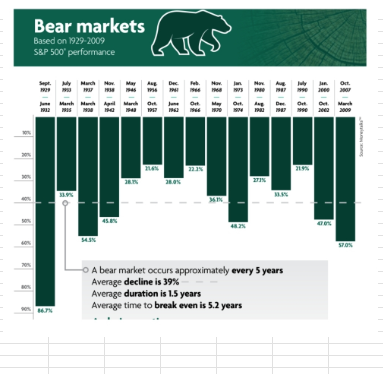
When you’re 25, you can afford to play by the Peter Pan Rule. If the market drops 40%, who cares? You have decades of "Time (T)" to let the math of recovery do its work. You can afford to stay in the "Neverland" of high-risk assets because you don't need the fuel yet.
But as you move into the "Red Zone": the five to ten years before and after retirement: the Peter Pan Rule becomes a suicide pact.
Too many 60-year-olds are still holding portfolios designed for 30-year-olds. They are participating in the market’s "Fear and Greed" cycle without a structural safety valve. They are ignoring their age-based risk limits, betting that they can stay "young" forever.
They think they are diversified. They think they are safe. But they are actually just sitting on a tank of pressurized "Assets at Risk" (AAR), waiting for a spark.

The Math of the Explosion: Sequence of Returns Risk
Why is a "Boil-over" so much more dangerous than "Boil-off"? It comes down to Sequence of Returns Risk.
If you have a $1,000,000 portfolio and you experience "Boil-off" (fees/inflation) of 2%, you have $980,000. It’s annoying, but the ship still flies.
But if you hit a "Boil-over" event: a 30% market crash right as you start taking withdrawals: the physics change. This is the Volatility Recovery Analysis Wall Street doesn't want to show you. To recover from a 30% loss, you don't need a 30% gain. You need a 42% gain just to get back to zero.
And if you are withdrawing money for living expenses while that 30% drop happens? You aren't just losing money; you are losing Time Compounding. You are resetting the clock at a moment when you no longer have more clock to give.
Wall Street treats your retirement like a game of probabilities. They tell you, "Historically, the market always goes up." But you aren't a "probability." You are a person with a specific timeline. You don’t need a "likely" outcome; you need Engineered Performance.
The "Grown Up" Safety Valves: Rules of 100, 75, and 50
To prevent a boil-over, engineers use pressure relief valves. In retirement planning, we use the Grown Up Rules. These are the mathematical boundaries that tell you when it’s time to move from "Participation" (gambling on headlines) to "Performance" (contractual certainty).
The Rule of 100: As you approach age 60, your "Asset Pyramid" should be shifting. You should have a clear percentage of your wealth protected from market loss.
The Rule of 75: By the time you are mid-retirement, your reliance on "Single-Pillar" assets (stocks, traditional real estate) should be minimized.
The Rule of 50: This is the ultimate safety margin.
These rules aren't suggestions; they are the structural requirements to prevent a catastrophic collapse. They are how you move your money from Assets at Risk (AAR) into Fully Performing Assets (FPA).
Think of FPA as the "Smartphone of Finance." Back in the day, you had a pager, a camera, a map, and a phone. Today, they are consolidated into one high-performance device. Most people are still using a "Rolodex" of single-pillar assets: a bank account here, a mutual fund there, a rental property there.
Fully Performing Assets consolidate 5–15 pillars of value (growth, protection, tax-free income, LTC) into one engineered vehicle. This is how you stop the boil-off and eliminate the boil-over.

Visualizing the contrast: The chaotic pressure of a traditional market portfolio versus the engineered stability of a SpaceX-grade financial plan.
The Margin Audit™: Finding Your Pressure Points
How do you know if you’re at risk for a boil-over? You need a Margin Audit.
Most "retirement plan reviews" are just sales pitches for more participation. They want to show you "projections" based on "averages." But averages don't pay the bills; cash flow does.
During a Million Dollar Hour™ Forecast, we don't look at "maybe." We look at your Compounding Efficiency and your Sequence of Return Margin. We ask the hard engineering questions:
What happens to your lifestyle if the market drops 30% tomorrow?
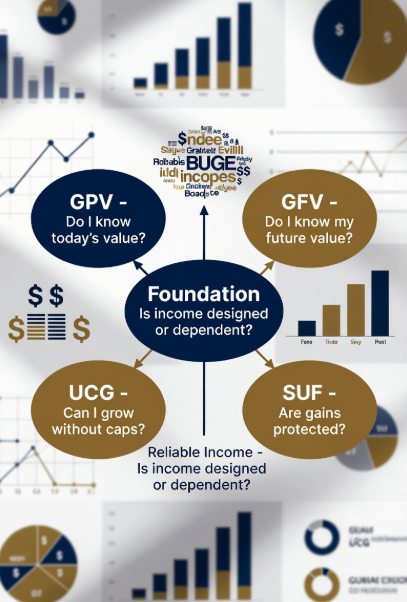
Do you have "Uncapped Gains" (UCG) that allow you to participate in the upside without being exposed to the downside?
Are you using Expanded Market Participation (EMP) to multiply your returns, or are you stuck in the old Wall Street "Cap" trap?
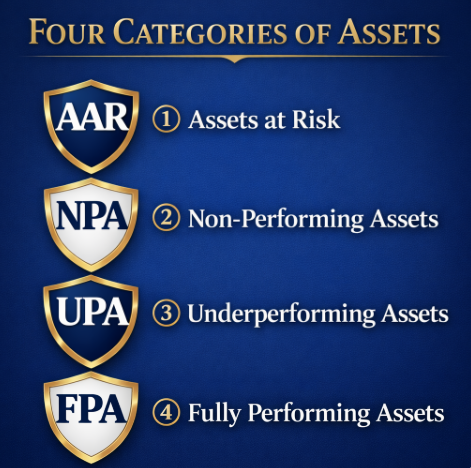
We categorize your assets into four buckets:
AAR (Assets at Risk): The pressurized fuel.
NPA (Non-Performing Assets): The "Infants" or emergency cash.
UPA (Underperforming Assets): The "Teens" that aren't pulling their weight.
FPA (Fully Performing Assets): The "Foundation" of your ship.
Stop Playing Peter Pan
The reason most people stay in the Boil-over Trap is because Wall Street has made them addicted to the "Greed/Fear" meter. When the meter is high on Greed, they feel young and invincible. When it’s high on Fear, they freeze.
But "Quiet Builders" don't have time to freeze. They don't have 1,000 years.
Risk is for business, not retirement. You built your wealth by taking calculated risks, but you keep your wealth by engineering certainty. You need to move from a "False Model" driven by market noise to an institutional-grade architecture based on Asset Liability Management (ALM).
You can estimate your income needs, but you cannot predict your portfolio value when losses and leaks are uncontrollable. Contrast that uncertainty with an engineered, guaranteed path.
Peace is the path. Wisdom is the way.
Don't let your retirement be the next "Rapid Unscheduled Disassembly" on the launch pad. It’s time to grow up your risk profile, install the safety valves, and ensure your money stays on Your Street.
Audit the margin. Protect your time. Engineer certainty.
The Peter Pan Rule is a fairy tale. The Boil-over is a reality. Which one are you planning for?
Ready for clarity instead of confusion?
The Million Dollar Hour™ is your educational, one-on-one retirement review that reveals where your plan leads : not just where it’s been.
👉 Schedule your session today.
Discover Which Wealth Killers Are Affecting You
Most people are impacted by 6–9 and don’t realize it
Wealth Killer #1: The Granddaddy : Why Market Volatility is Your Retirement’s Greatest Enemy
Concerned about market losses, taxes, or income reliability?
Take the 7 Question Retirement Stress Test →
You can keep participating… Or you can finally see the outcome. The Million Dollar Hour™ shows you exactly:
✔ Where you are ✔ Where you’re going ✔ How to fix the gaps 👉 Book your session now
Check out the Retirement Blueprint