
Retirement Strategies That Maximize Income, Eliminate Risk, and Help Ensure You Never Run Out of Money How to Achieve The Retirement Future Everyone Seeks
Most retirement plans are built on assumptions that no longer hold up—market averages, predictable tax rates, and the belief that time will always recover losses. But as you approach or enter retirement, the rules change. What worked during your accumulation years can become a liability during the withdrawal phase.
This blog is designed to help you rethink traditional strategies and discover a more engineered approach to retirement income—one focused on certainty, efficiency, and control.
Here, you’ll learn how to reduce or eliminate the biggest threats to your financial future, including market losses, rising taxes, hidden fees, and the silent erosion caused by lost time. We break down complex financial concepts into clear, actionable insights so you can make better decisions about your 401(k), IRA, and retirement income strategy.
You’ll also discover why many conventional approaches—like relying on average returns or the 4% rule—can expose you to unnecessary risk, especially when withdrawals begin. Instead, we explore strategies designed to protect your principal, improve compounding efficiency, and create predictable income streams that last.
Our focus is on helping you transition from “assets at risk” to a more stable and structured approach using fully performing assets—where growth, income, and protection work together instead of against each other.
Whether you’re still working or already retired, the goal is simple:
help you keep more of what you earn, generate more reliable income, and build a plan that doesn’t depend on hope, timing, or market luck.
If you’ve ever wondered:
* How to create tax-efficient retirement income
* How to avoid sequence of returns risk
* How to reduce fees and increase net returns
* How to design income that doesn’t run out
—you’re in the right place.
Explore the articles below and start building a retirement strategy based on engineering, not guesswork.

Why Your Retirement Statement Returns Are Often Misleading
The Performance Gap: Why Your Statements are Lying to Your Face
One of the fastest ways to uncover hidden risk is to take our 7 Question Retirement Stress Test.
![[HERO] The Performance Gap: Why Your Statements are Lying to Your Face](https://cdn.marblism.com/CSBSY0xxksH.webp "[HERO] The Performance Gap: Why Your Statements are Lying to Your Face")
Start here: See what your retirement actually looks like → 👉 Book Your Million Dollar Hour™
Your Statement Says You Made 8%, But Your Bank Account Says Otherwise. Here’s Why.
You open your quarterly statement. You scan the page for the big number. There it is: "Average Annual Return: 8%."
You should be thrilled, right? You’ve done the mental math. If your money grows at 8%, it should double every nine years or so. But as you look at your actual ending balance, something feels off. The math isn’t "mathing." The balance hasn't moved the way an 8% gain suggests it should. In fact, after three years of "decent" returns, you’re barely ahead of where you started.
Welcome to The Performance Gap.
This isn't a glitch in the software, and it isn't a typo. It’s the result of a fundamental disconnect between Wall Street’s marketing and your actual financial reality. It’s the difference between "Average" and "Actual."
At Your Street Wealth, we call this the gap between Participation and Performance. While Wall Street wants you to "participate" in their noise, we want you to "engineer" a result.
The Great Math Illusion: Average vs. Actual
Wall Street loves the word "average" because it’s a great mask for volatility. But averages don’t pay for groceries in retirement. Dollars do.
Let’s look at a simple scenario that exposes the lie. Imagine you have $100,000.
Year 1: The market takes a dive, and you lose 50%. You now have $50,000.
Year 2: The market "rebounds" and gains 50%.
If you ask a Wall Street broker for your average return, they’ll tell you it’s 0%. (-50 + 50 = 0). It sounds like you broke even. You might even feel okay about it.
But look at your account. You started with $100,000. You lost half ($50,000). Then you gained 50% of that remaining $50,000, which is $25,000. Your ending balance is $75,000.
Wall Street says you averaged 0%. Your math says you lost 25% of your wealth.
This is the "Math of Recovery" in action. To recover from a 50% loss, you don’t need a 50% gain; you need a 100% gain just to get back to where you started. If you lose 30%, you need a 42% gain to break even.
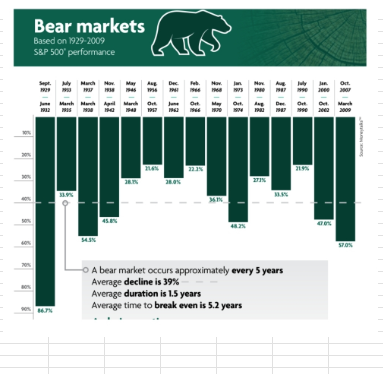
When your money is "participating" in the market, you are constantly fighting the gravity of these loss cycles. Money can recover. Time never does. Every year you spend "breaking even" is a year of compounding growth you will never get back.
The Wealth Killers: Why Your Portfolio is Leaking
The Performance Gap isn't just caused by market volatility. It’s widened by what we call "Wealth Killers." These are the silent leaks in your financial bucket that Wall Street rarely highlights on the front page of your statement.
Fees: Management fees, platform fees, and hidden transaction costs. They might look like small percentages, but they are calculated on your total balance, regardless of whether you made money that year.
Taxes: If your growth is sitting in a traditional "tax-deferred" bucket, you don't actually own all that money. You have a silent partner: the IRS: who will eventually take 20%, 30%, or more of your harvest.
Inflation: The silent thief. If your statement says you made 5% but inflation is at 6%, you didn't grow. You lost purchasing power.

When you add these up, the "Average Return" on your statement becomes a complete fiction. It’s marketing, not math. To close the gap, you must move from a model of "leaky" participation to one of Compounding Efficiency.
Single-Pillar Thinking in a SpaceX World
Most retirees are still using what we call the "Single-Pillar" model. They have a bank account (Pillar: Liquidity), a stock portfolio (Pillar: Growth), and maybe some real estate (Pillar: Equity). Each asset does one thing, and each comes with its own set of high risks or high fees.
It’s like carrying around a pager, a film camera, a paper map, and a Walkman. It’s a Rolodex in a SpaceX world. It was durable in the 1980s, but it’s inadequate for the speed and risk of modern retirement.
The alternative is the Fully Performing Asset (FPA). Think of an FPA as the "smartphone" of finance. Just as your phone consolidated ten different devices into one, an FPA consolidates 5 to 15 "pillars" of value into a single vehicle.
An FPA offers:
Uncapped Gains (UCG): You participate in market upside.
Expanded Market Participation (EMP): Strategic multipliers (110%–200%) that turn a 10% market gain into an 11% or 20% gain in your pocket.
0% Floor: You never, ever lose a dime to market volatility. When the market drops 30%, your statement stays flat. You lock in your gains.
The Asset Pyramid: Where Does Your Money Sit?
To understand your Performance Gap, you have to audit where your assets live. We use the Asset Pyramid to categorize wealth:
Non-Performing Assets (NPA): The "Infants." Think of cash under the mattress or basic checking. Necessary for emergencies, but they don't grow.
Assets at Risk (AAR): The "Teens." These are your traditional stocks and mutual funds. They have potential, but they are volatile, emotional, and can lose half their value overnight.
Fully Performing Assets (FPA): The "Foundation." These are engineered for certainty. They provide growth without loss, tax-advantaged positioning, and guaranteed income.

If your pyramid is top-heavy with Assets at Risk, you aren't building a retirement; you’re gambling on a sequence of returns you can't control. You are depending on the market instead of controlling the outcome.
Control vs. Dependence: Audit the Margin
Wall Street wants you to focus on macro headlines: the Fed, the election, the latest tech bubble. Why? Because as long as you’re focused on the "noise," you won't look at the "margin."
Wealth isn't built on macro headlines. It’s built on micro margins.
We use a process called The Margin Audit™ to find exactly where your wealth is leaking. We look at your Sequence of Return Margin: the risk that a market drop at the wrong time will permanently derail your lifestyle. We perform a Volatility Recovery Analysis to show you exactly how many years you are wasting just trying to get back to zero.
The goal is to move you from "Hoping" to "Knowing."
The Million Dollar Hour™: Revealing the Actual Forecast
You can estimate your income needs, but you cannot predict your future portfolio value when losses and leaks are uncontrollable. Wall Street's "projections" are just guesses dressed up in fancy charts.
We don't do guesses. We do engineering.
The Million Dollar Hour™ Forecast is our premium, high-clarity session designed specifically for "Quiet Builders": those business owners and engineers who are tired of the Wall Street fog. This isn't a "free consultation" designed to sell you a mutual fund. It is a $995 institutional-grade audit of your financial architecture.
During this hour, we reveal:
Your Actual Compounded Growth: Not the "average" your broker tells you, but the real dollar-weighted return you are likely to keep.
The Leak Detection: Exactly how much inflation, fees, and taxes are draining from your future.
The Engineered Path: How to shift from -30%/+30% volatility to a 0%/+30% environment using Fully Performing Assets.

Peace is the Path, Wisdom is the Way
If you’re feeling financially fatigued, it’s probably because you’ve been told to "participate" in a system designed to extract value from you. You’ve been told that risk is a requirement for growth.
It isn’t. Risk is for business; it’s not for retirement.
Audit the margin. Protect your time. Engineer certainty. When you close the Performance Gap, you stop wondering "what if" and start knowing "what is." You move from the anxiety of the market to the peace of a designed outcome.
Your money, your rules, in your time, on your street. That is the architecture of a secure retirement.
Ready for clarity instead of confusion?
The Million Dollar Hour™ is your educational, one-on-one retirement review that reveals where your plan leads : not just where it’s been.
👉 Schedule your session today.
Discover Which Wealth Killers Are Affecting You
Most people are impacted by 6–9 and don’t realize it
Wealth Killer #1: The Granddaddy : Why Market Volatility is Your Retirement’s Greatest Enemy
Concerned about market losses, taxes, or income reliability?
Take the 7 Question Retirement Stress Test →
You can keep participating… Or you can finally see the outcome. The Million Dollar Hour™ shows you exactly:
✔ Where you are ✔ Where you’re going ✔ How to fix the gaps 👉 Book your session now
Check out the Retirement Blueprint