
The "Day One" Disaster: Why a Market Dip the Day You Retire Could Cost You a Decade of Wealth
The "Day One" Disaster: Why a Market Dip the Day You Retire Could Cost You a Decade of Wealth
![[HERO] The "Day One" Disaster: Why a Market Dip the Day You Retire Could Cost You a Decade of Wealth](https://cdn.marblism.com/VuVob73R_OE.webp "[HERO] The \"Day One\" Disaster: Why a Market Dip the Day You Retire Could Cost You a Decade of Wealth")
You’ve spent thirty or forty years climbing the mountain. You’ve watched the ticker tapes, maxed out the 401(k)s, and survived the "once-in-a-lifetime" crashes of 2000, 2008, and 2020. Now, you’re standing at the peak. You have your "number." You’re ready to plant the flag and start enjoying the view.
But there’s a trap waiting for you on the way down.
In the world of institutional finance, we call it Sequence of Returns Risk. On Your Street, I call it the "Day One Disaster." It is the silent killer of even the most well-padded retirement nests.
Most people believe that if their portfolio "averages" 7% or 8% over their retirement, they’ll be just fine. Wall Street loves this narrative because it keeps you "participating" in their game. But here is the cold, mathematical truth: Your "average" return doesn't pay your bills in retirement. Your sequence does.
If the market takes a dive the day you stop working: even a modest 10% dip: it could effectively shave a decade off your wealth. Let’s look at why your "safe" 401(k) might be a ticking time bomb and how we can engineer a path that makes the market's mood swings irrelevant.
The Sprained Ankle Analogy: Why Timing is Everything
Imagine you’re about to run a marathon. You’ve trained for years. But ten seconds after the starting gun goes off, you trip and sprain your ankle. You aren't out of the race, but every mile you run from that point on is twice as hard. You’re burning more energy just to maintain a slower pace, and you're damaging your body with every step.
Retiring into a down market is exactly like that sprained ankle.
When you are in the "Accumulation Phase" (saving money), a market drop is actually a clearance sale. You’re buying more shares at a discount. But the moment you flip the switch to the "Distribution Phase" (spending money), the rules of gravity change.
If your $1,000,000 portfolio drops 10% in Year One of retirement, you now have $900,000. But you still need your $40,000 annual income to pay for your life. So, you sell $40,000 worth of shares while they are at rock-bottom prices. Your "nest egg" is now $860,000.
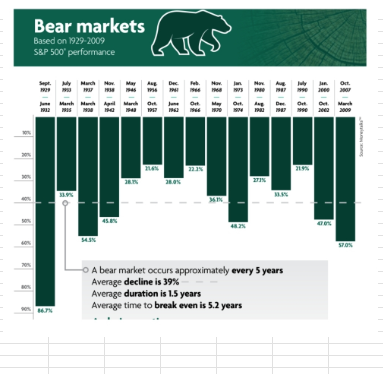
To get back to your original $1,000,000, your remaining money doesn't just need a 10% gain; it needs to grow by over 16% just to break even. This is the Math of Recovery: a 30% loss requires a 42% gain just to get back to zero. When you add annual withdrawals to that math, the "recovery" often becomes impossible.
The Average Return Lie
Wall Street thrives on "Average Returns." It’s a beautiful marketing tool. They’ll show you a chart that goes up and to the right, claiming an average of 8%.
But consider two retirees, Bob and Alice.
Bob gets +20%, +10%, and -15% in his first three years.
Alice gets -15%, +10%, and +20% in her first three years.
Both have the exact same "average" return. But if both are withdrawing money for living expenses, Alice might run out of money ten years sooner than Bob. Why? Because Alice was forced to cannibalize her principal when it was down. She sold her "seed corn" to survive the winter, and now she doesn't have enough left to plant for the spring.
This is why retirement income planning is fundamentally different from "investing." Investing is about participation; retirement is about Engineered Performance.
Participation vs. Engineered Performance
Most retirees are stuck in what I call "Participation Mode." They are simply passengers on the Wall Street roller coaster. They’ve been told to "stay the course" and "ride it out." That works when you’re 35. It’s a catastrophe when you’re 65.
At Your Street Wealth, we shift the focus from macro headlines to micro margins. We look at your Sequence of Return Margin: the amount of volatility your plan can actually withstand before it breaks.
Traditional plans are like a Rolodex in a SpaceX world. They were durable in the 1980s when interest rates were double digits and pensions were standard. Today, those strategies are inadequate for the speed and risk of modern markets.
We use a "Multi-Pillar" approach. Think of your traditional assets (stocks, bonds, real estate) as Single-Pillar Assets. They do one thing, but they are vulnerable. If the market crashes, the stock pillar falls. If interest rates spike, the bond pillar cracks.

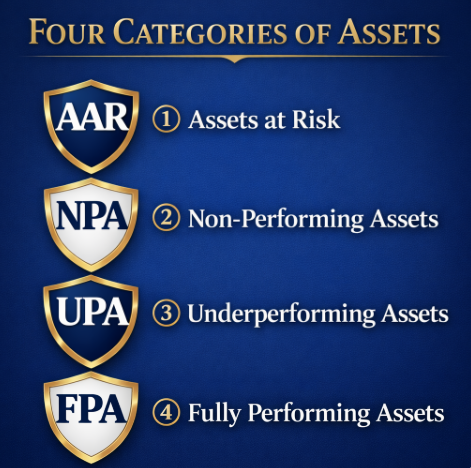
Instead, we look toward Fully Performing Assets (FPA). These are the "smartphones" of finance. Just as your iPhone consolidated your pager, your camera, your GPS, and your phone into one device, an FPA consolidates growth, protection, and tax-free income into one vehicle.
Protect Retirement Savings from Market Crash: The 0% Floor
The most powerful tool in our engineering kit is the 0% Floor.
In a traditional Wall Street model, your outcomes range from -30% to +30%. That’s not a plan; that’s a gamble. You’re spinning sharp knives and hoping you don't get cut.
On Your Street, we aim for a range of 0% to +30%. By engineering a floor where your principal is protected from market losses, we eliminate the "Day One Disaster" entirely. If the market dips 20% the day you retire, your account stays at 0%. You don't lose a dime of principal. You don't have to participate in the "Math of Recovery."
This is what we call Volatility Recovery Analysis. When you don't have to spend three years "getting back to even," your money compounds with massive efficiency.
The Margin Audit™: Identifying the Leaks
Before we can build a "SpaceX" retirement, we have to perform a Margin Audit™. Most "Quiet Builders": the successful, hard-working folks I serve: have "leaks" in their current plans that they don't even see. These leaks usually come in the form of:
Management Fees: Paying 1-2% for someone to "manage" your risk while you still take 100% of the downside.
Tax Volatility: Having all your money in "tax-deferred" buckets, making the IRS your largest, most unpredictable partner.
Uncapped Risk: Having no "ceiling" on your losses.
By auditing these margins, we can move assets from Assets at Risk (AAR) into Fully Performing Assets (FPA).
Is Your Retirement "Math-Proof"?
You can estimate your income needs, but you cannot predict the future value of a volatile portfolio. This is the great lie of traditional financial planning. They give you a "Monte Carlo" simulation that says you have an "85% chance" of not running out of money.
Would you board a plane if the pilot said you had an 85% chance of landing? Of course not. You want certainty.
The best retirement income strategies aren't based on "hope" or "market averages." They are based on Banking Architecture. This is the same logic that institutional banks use to stay profitable regardless of whether the market is up or down. They don't "participate"; they "engineer" their margins.
The Solution: The Million Dollar Hour™ Forecast
If you are feeling financially fatigued by the constant "noise" of the markets, it’s because you are operating on a false model. You are playing a game where the house (Wall Street) always wins because they control the rules.
It’s time to set your own rules.
The Million Dollar Hour™ Forecast is designed to provide the "Architecture" that your current plan is likely missing. In 60 minutes, we don't just look at your balance sheet; we look at your Compounding Efficiency. We identify exactly how many "years of wealth" you stand to lose if a market dip hits in your first five years of retirement.
We calculate your Sequence of Return Margin and show you how to close the gap.
This isn't a "free consultation" where you get a sales pitch. It’s a $995 professional engineering session (Margin Audit) for people who are serious about protecting what they’ve built. We filter for "Quiet Builders" because we know that true wealth isn't built on macro headlines: it’s built on micro margins and precision.
Peace is the Path, Wisdom is the Way
Retirement shouldn't be a time of "Greed and Fear." It should be a time of certainty. When you move from the "Rolodex" of traditional stocks and bonds to the "Engineered Performance" of Fully Performing Assets, the "Day One Disaster" becomes a non-issue.
You stop worrying about what the Fed is doing or what the latest headline says. You start living by a different mantra: Your Money, Your Rules, In Your Time, On Your Street.
Don't let a "bad timing" event steal a decade of your hard work. Architecture grows and heals; participation extracts and harms. Choose architecture.
Ready for clarity instead of confusion?
The Million Dollar Hour™ is your educational, one-on-one retirement review that reveals where your plan leads : not just where it’s been.
👉 Schedule your session today.