The Stop-Loss Myth: Why Wall St 'Guard Rails' Are Traps
The Stop-Loss Myth: Why Wall Street’s 'Guard Rails' Are Actually Traps
One of the fastest ways to uncover hidden risk is to take our 7 Question Retirement Stress Test.
![[HERO] The Stop-Loss Myth: Why Wall Street’s 'Guard Rails' Are Actually Traps](https://cdn.marblism.com/xJPpEO1DgiV.webp "[HERO] The Stop-Loss Myth: Why Wall Street’s 'Guard Rails' Are Actually Traps")
Start here: See what your retirement actually looks like → 👉 Book Your Million Dollar Hour™
Wall Street is a master of linguistics. They love terms that sound responsible, protective, and, above all, safe. One of the most pervasive "safety" tools sold to the average investor is the stop-loss order.
On paper, it sounds like a no-brainer. You tell your broker, “If this stock or fund drops by 10%, sell it immediately to protect me from further losses.” It feels like a guard rail on a winding mountain road. You think you’ve built a safety net into your retirement plan review.
But here’s the cold, mathematical reality: A stop-loss isn't a guard rail. It’s an ejector seat that fires you out of the cockpit while the plane is still flying, usually just before it pulls out of a nose dive.
If you are a "Quiet Builder", someone who has spent decades accumulating wealth and is now looking for a way to protect retirement savings from a market crash, you need to understand why the stop-loss is actually a structural failure in your financial architecture.
The Illusion of the "Negative" Strategy
In any other area of life, a safety device prevents the bad thing from happening. A seatbelt keeps you in the car; a stop-loss kicks you out of the market.
A stop-loss is what we call a "negative" strategy. It is an instruction to realize a loss. Think about that for a second. Your primary strategy to protect your wealth is to guarantee that a portion of it disappears the moment things get volatile.
When you set a stop-loss at 5%, 10%, or 15%, you are essentially telling the market: "I am willing to surrender 15% of my hard-earned capital and stop the engine of compounding indefinitely because I’m afraid of what might happen next."
Wall Street titans often say you should never make a trade until you know the outcome. But on Wall Street, the outcome is always indeterminate. You don't know when the market will go up, by how much, nor when it will go down, or by how much. The two movements are totally unrelated. By using a stop-loss, you are attempting to solve a math problem with a "hope" strategy.
The Micro-Failure Loop: 365 Days of Risk
The stop-loss creates a structural problem that could result in a micro-failure 365 days a year.
Imagine you set a 10% stop-loss. The market has a "bad day", a flash crash or a temporary dip driven by a headline. Your stop-loss triggers. You have now successfully:
Realized a 10% loss.
Paid a transaction fee to Wall Street (they love it when you trade).
Stopped your compounding.
Created a "Math of Recovery" mountain to climb.

Now, what happens next? Often, the market bounces back. But you aren't in the market anymore. You’re sitting on the sidelines in cash, having paid a fee to lose money. Now you have to decide when to "get back in." If you wait until the market is back to where it was, you’ve effectively "bought high and sold low": the exact opposite of every piece of investment advice ever given.
This is a structural flaw. You are participating in a system where you are just a passenger, not the operator. Wall Street collects its fees whether you win or lose, but they especially love it when you are active. The stop-loss is a high-frequency tool for value extraction that serves the institution, not the retiree.
The Brutal Math of Recovery
When you use a stop-loss, you are ignoring the most important math in retirement: The Math of Recovery.
Most people think that if they lose 10%, they just need a 10% gain to get back to even. That is a dangerous lie.
If you lose 10%, you need an 11.1% gain to break even.
If you lose 20%, you need a 25% gain to break even.
If you lose 30%, you need a 43% gain to break even.
When you trigger a stop-loss during a period of high sequence of returns risk, you are digging a hole that requires a miracle to fill. Retirees between the ages of 45 and 75 do not have the luxury of time to wait for a 43% recovery gain while simultaneously drawing income for their lifestyle.
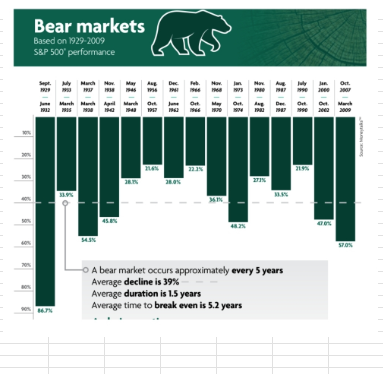
The "Visibility Gap" in traditional planning hides this math. Wall Street wants you to focus on "average returns." But you can't eat "average." You eat actual dollars. When those dollars are deleted by a triggered stop-loss and a subsequent fee, your "Compounding Efficiency" is shattered.
⚠️ If this applies to you… your retirement may already be at risk.
Participation vs. Architecture
Why do people participate in this? They do it in hopes they will benefit but not be hurt "too much."
But "hope" is not a retirement strategy. It is a participation prize.
On Wall Street, you are a participant. You are riding a roller coaster you didn't build and don't control. You are at the mercy of interest-rate ripples: those "spinning sharp knives" that can cut through a portfolio in days.
At Your Street Wealth, we move from Participation to Architecture.
A wise investor knows exactly how much it takes to produce a specific amount of income in a specific duration of time. This is the PRT formula (Principal Rate Time). In a designed system, you know the outcome before you start. This isn't possible on Wall Street, but it is the foundation of institutional-grade Asset Liability Management (ALM).
Instead of a "Rolodex in a SpaceX world": which is what a stop-loss strategy really is: we use modern financial engineering to build a "Floor of Zero."
The Smartphone of Finance: Fully Performing Assets (FPA)
Remember when you had a separate pager, a camera, a GPS, and a phone? Then the smartphone came along and consolidated all those "single-pillar" technologies into one engineered device.
Traditional assets like stocks, bonds, and real estate are "single-pillar" assets. They do one thing (maybe), but they carry massive side effects (risk, fees, taxes).
Fully Performing Assets (FPA) are the "Smartphone of Finance." They consolidate 5 to 15 pillars of value into a single vehicle.
![Magnifying glass highlighting '5 GUARANTEES']](https://cdn.marblism.com/KWSNx5R-ilW.png)
An FPA doesn't need a stop-loss because it has a Floor of Zero engineered into its DNA.
When the market goes up, you participate in Uncapped Gains (UCG) and Expanded Market Participation (EMP).
When the market crashes, your account simply stays at zero for that period.
You don't lose your principal. You don't lose your previous gains. You don't pay a fee to realize a loss. You simply wait for the next upward move.
This is the difference between a "False Model" driven by greed and fear and a "Safety-First" strategy rooted in banking architecture. By removing the possibility of a negative year, you solve the Math of Recovery problem forever. 100% of your future gains go toward growth, rather than filling a hole created by a "stop-loss" trap.
The Visibility Gap: Are You an Architect or a Passenger?
If your current retirement plan review consists of a broker telling you to "stay the course" and "set some stop-losses just in case," you are a passenger on a ship with no rudder.
You are dealing with an indeterminant outcome. You are guessing at your future value because you cannot control the volatility or the leaks (fees and taxes).
True wealth isn't built on macro headlines; it’s built on micro margins. It’s built on Compounding Efficiency and a Volatility Recovery Analysis that ensures you never have to work twice as hard just to get back to where you were yesterday.

The "Quiet Builder" knows that peace is the path and wisdom is the way. Wisdom tells us that a system that requires you to "stop your losses" by selling your assets is a system designed to fail the user and feed the institution.
The Million Dollar Hour™: Stop Participating, Start Engineering
It’s time to move your money off of "Wall Street" and onto "Your Street."
We don't do "free consultations" that result in a sales pitch for the same old stop-loss traps. We provide a high-friction, high-clarity Margin Audit™.
The Million Dollar Hour™ Forecast is a $995 professional engineering session designed for the "Architect" persona. In 60 minutes, we look at the structural integrity of your current plan. We identify the "Visibility Gap" and show you exactly how to bridge it using the five pillars of guaranteed wealth.
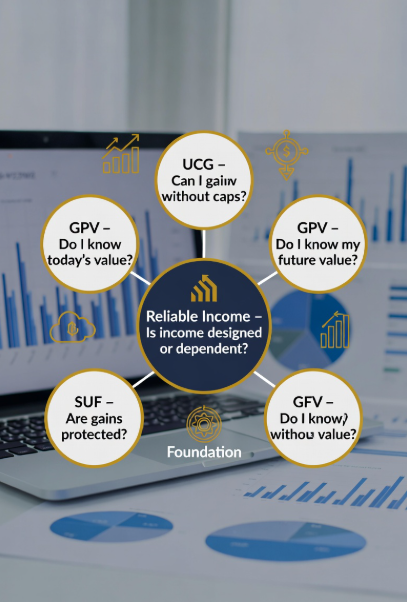
We will analyze your Sequence of Return Margin and show you how a shift to Fully Performing Assets can provide uncapped growth without the "spinning knives" of market risk.
Your Money. Your Rules. In Your Time. On Your Street.
Stop-losses are for gamblers who know they are in a rigged game. Architecture is for builders who want to know the outcome before they lay the first brick.
Ready for clarity instead of confusion?
The Million Dollar Hour™ is your educational, one-on-one retirement review that reveals where your plan leads : not just where it’s been.
👉 Schedule your session today.
Discover Which Wealth Killers Are Affecting You
Most people are impacted by 6–9 and don’t realize it
Concerned about market losses, taxes, or income reliability?
Take the 7 Question Retirement Stress Test →
You can keep participating… Or you can finally see the outcome. The Million Dollar Hour™ shows you exactly:
✔ Where you are ✔ Where you’re going ✔ How to fix the gaps 👉 Book your session now
Check out the Retirement Blueprint